Data Exfiltration: Prevention, Risks & Best Practices

Imagine a scenario where a competitor gains access to your organization's most sensitive data, causing severe financial loss and irreparable damage to your reputation. This nightmare can become a reality through data exfiltration. Data exfiltration is a real threat to organizations, as it involves the unauthorized transfer of sensitive information, the effects of which can lead to operational disruption, financial losses and damage to reputation.
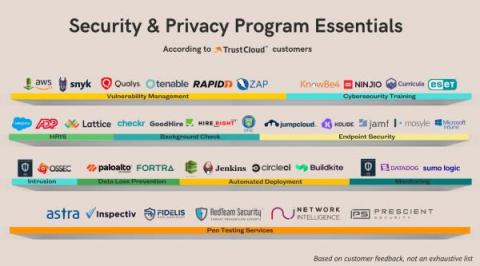
Your Shopping List for Security & Privacy Program Essentials

Whether your org is about to begin its journey for SOC 2, or you’re planning to wrangle up more standards (think ISO 27001, CMMC, and HIPAA, to name a few), the set of tools and software you have in place can be make-or-break. We asked our customers what their recommended tools were, and compiled your shopping list for security and privacy program essentials. Tools or services marked with * denotes a partner or integration.

Threat Hunting with Splunk: Hands-on Tutorials for the Active Hunter

At Splunk, you may hear us pontificating on our ponies about how awesome and easy it is to use Splunk to hunt for threats. Why, all you need to do is use X and Y with Splunk to find a Z score (no zombies were injured) and BOOM! That baddie in your network is detected. Going back to at least a decade, we’ve tried to make it easy — as you’ll see in the resources below — and yet threat hunting is about as easy as telling someone how easy it is to draw an owl.

Mimic your mental model with Project Collections

At Snyk we’re constantly trying to improve how you can work with Projects at scale. To continue the journey, we’ve been furthering how you can organize your Projects. There are nearly limitless ways to organize projects outside of Snyk because there is no standard mental model that is used by everyone, for example, some organize projects as mono-repos, and others as application components.

Compound Extortion: UnSafeLeaks

Among the range of data leak sites monitored by JUMPSEC, our attention has been drawn to a recent variant called “UnSafeLeaks”, due to its distinctively malicious and personalised approach, setting it apart from typical leak sites that focus primarily on explicit financial extortion. Perhaps more remarkably, a number of targeted organisations also appear to have previously been compromised by closely affiliated groups, suggesting the potential re-extortion of victim organisations.

Top 10 Questions About the Apache License

According to Mend.io research, the Apache 2.0 license is the most popular license of its kind, as 30% of open source licenses currently in use is Apache. Owing to its frequent use, it’s important to understand how the license works, its benefits, limitations, implications, and requirements. To help you, here are ten frequently asked questions about it.

7 Keys to Perfecting Your Cyber Risk Management Strategy

A cyber risk management strategy is a plan for how you will secure your organization from evolving cyber threats. Your strategy is made up of key elements that work together to create a comprehensive approach to proactively mitigating risks and protecting organizational assets. Here are the basic steps you should take to develop an effective cyber risk management strategy.

Types of Multi-Factor Authentication (MFA)

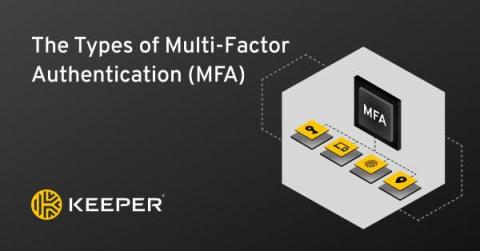
The four types of Multi-Factor Authentication (MFA) are knowledge, possession, inherence and location. These authentication types provide a foundation for a number of MFA methods, giving users multiple options for securing their data, ranging from SMS message tokens to hardware security keys. Which method is right for you or your business can depend upon what you have access to and how secure you want to be.