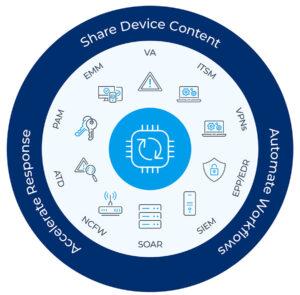
In today’s rapidly evolving threat landscape, cybercriminals have become more sophisticated than ever, making it crucial to stay abreast of the latest trends and tactics. The challenge is exacerbated by the expanding attack surface as more devices and device types connect to enterprise networks: IT, OT, IoT and IoMT devices, all with known vulnerabilities that can be exploited.
In March 2022, the U.S. Securities and Exchange Commission (SEC) issued a proposed rule, the Cybersecurity Risk Management, Strategy, Governance, and Incident Disclosure, that, if adopted, would require companies to disclose their cybersecurity governance capabilities and the role of the board concerning oversight of cyber risk.
Both CalPERS and CalSTRS are agencies that manage retirement funds and health benefits for retired California teachers, government employees, and more types of public service employees. These organizations handle a huge amount of personal and financial data for teachers and other individuals, and they even handle pensions for them. That's why it's so upsetting to learn that both CalPERS and CalSTRS were impacted by a recent data breach.
Whether it is reporting a phishing email or something that might be illegal that a coworker is doing, your employees should be a strong last line of defense for security and compliance. According to Gartner, almost 60 percent of all misconduct that is observed in the workplace never gets reported. For decades both compliance officers and security leaders have known that the earlier employees report incidents, the lower the risk. Yet low reporting rates continue to be a problem.
In today's digital era, businesses actively strive to heighten network agility, boost security, and slash operational costs. Network Function Virtualization (NFV) and Secure Access Service Edge (SASE) stand at the forefront of this revolution, reshaping enterprise networking and security. NFV breathes new life into traditional, hardware-based network functions, turning them into versatile, software-based solutions deployable on virtualized infrastructure.
Smart automation in ASM refers to the application of intelligent and adaptive technologies and tools to automate the attack surface management process. By leveraging machine learning algorithms and artificial intelligence technologies, enterprises can automate discovery and threat exposure, drastically reducing the time and resources required for the process. They can also minimize false positives and false negatives.
Russia’s APT28 (also known as “Fancy Bear” or “BlueDelta”) is using spear phishing to compromise Ukrainian government and military entities, according to researchers at Recorded Future. The phishing emails are designed to exploit vulnerabilities in the open-source webmail software Roundcube.
Ransomware is still present and growing across the threat landscape, to the extent that some organizations now include the cost of a ransomware attack in their annual budgets. Data from our Internet Security Report - Q4 2022 reveals that ransomware detections on endpoints rose by an alarming 627% in 2022 compared to the previous year. While ransomware does not discriminate by industry type, the report clearly shows the manufacturing sector was the most affected during 2022.