Security | Threat Detection | Cyberattacks | DevSecOps | Compliance

Laying the groundwork: Building security foundations at the partial stage

Every mature security program starts somewhere. For many organizations—especially startups and early-stage companies—this is what the NIST Cybersecurity Framework (CSF) calls the partial stage. ‍ At this level, security is often reactive. Teams operate with minimal resources and ad-hoc processes, working hard to meet customer or compliance demands but without the structure or long-term strategy needed to scale.

Detect Secrets in GitLab CI Logs using ggshield and Bring Your Own Source

Discover how to automatically detect secrets in GitLab CI logs using ggshield and GitGuardian's Bring Your Own Source initiative. Learn to set up real-time scanning to prevent credential leaks, enhance compliance, and secure your entire CI/CD pipeline from hidden risks.

How IONIX Protects You in the AI Gold Rush

The AI revolution is moving at breakneck speed. Every week, new tools, frameworks, and integrations hit the market. Developers eager to harness the power of large language models and automation platforms are spinning up assets with little thought to long-term security. The result is a wave of exposed services — chatbots, APIs, orchestration tools, and workflow systems — that anyone on the internet can stumble upon. Attackers see this as an open invitation.

Storm-2603: Targeting SharePoint Vulnerabilities and Critical Infrastructure Worldwide

This blog is the latest in a series that delves into the deep research conducted daily by the Trustwave SpiderLabs Threat Operations team on major threat actor groups currently operating globally. Trustwave SpiderLabs Cyber Threat Intelligence team has developed a new detailed analysis of Storm-2603, the threat group associated with the recent exploitation of security flaws in Microsoft SharePoint Server.

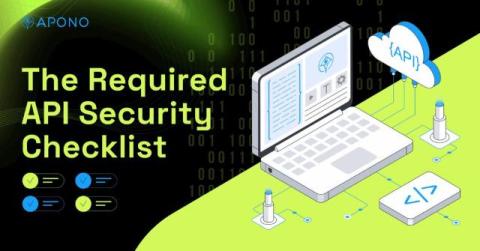
The Required API Security Checklist [XLS download]

APIs are the foundation of modern applications, and attackers know it well. A single misconfigured endpoint or exposed token can give adversaries a direct path into sensitive systems and data across your environment. Your already overburdened security teams can’t afford to miss what may be their fastest-growing attack surface. How fast-growing is the threat?

Powering Zero Trust Networking with Elastic and Gigamon AMI

The cybersecurity perimeter is gone. In its place, a far more resilient framework has emerged: Zero Trust Networking (ZTN). This security model assumes no transaction is automatically permitted. Every connection, request, and data flow must be verified continuously. Learn how Elastic and Gigamon Application Metadata Intelligence (AMI) enable a security posture built on constant verification, rapid response, and adaptive trust.

What is a HIPAA Violation? Fines and Penalties for Failed HIPAA Compliance

Complying with HIPAA is tricky, as it consists of multiple rules and requirements. However, following them is a must if you want to secure your data and avoid penalties. In this article, we discuss common types of HIPAA violations and the penalties you could face for breaking this law. Find out below how to ensure HIPAA compliance for your healthcare organization and the security of patient information you collect.

Microsoft 365 Backup Best Practices

Did you know that the average cost of an outage can be as high as $9K per minute? Risks concerning your Office 365 data range from accidental deletions and ransomware to service outages. In 2025, we already witnessed a number of outages happening throughout the year. On March 1, several key services such as Outlook, Teams, and even Azure were disrupted. It is reported that 30K Outlook users, 150 Microsoft Teams users, and 24K Office 365 users were affected by this.

Military ID Deepfakes: How North Korean Hackers Target the South with AI

North Korean threat actor Kimsuky has escalated its social engineering tactics by leveraging military ID deepfakes to deceive South Korean targets. According to a recent analysis by South Korean cybersecurity firm Genians, the group is now using AI-generated images to impersonate military personnel, making phishing campaigns more convincing and harder to detect.