Security | Threat Detection | Cyberattacks | DevSecOps | Compliance

Elastic's James Spiteri: Why SecOps teams need to focus on small incremental wins and not try to boil the ocean

In our second episode, we speak with Elastic’s Product Marketing Director James Spiteri, an experienced security practitioner turned product marketer with a passion for making security accessible and easy for anyone and everyone.

Why use a managed services provider for your SASE implementation

Recently the architecture model known as Secure Access Service Edge (SASE) has been gaining momentum. Not surprising, when the model provides benefits - including reduced complexity of management, improved network performance and resiliency, security policy implemented consistently across office and remote users and lower operational expense. In fact, according to a recent ESG survey, 70% of businesses are using or considering a SASE solution.

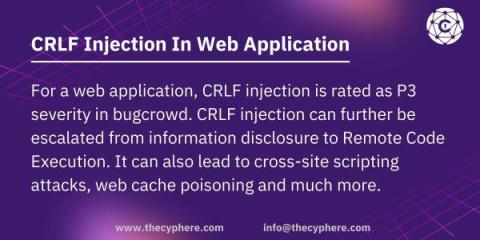
CRLF Injection Attack - Explained

Web applications across the digital world are teeming with vulnerabilities increasingly equipped to defeat security mechanisms. Among them are injection attacks. We are aware of the many injection vulnerabilities present in a web application, for example, SQL injection, HTML injection, CRLF injection, cross-site scripting and many others. This article will discuss CRLF injection vulnerability in detail for web application security.

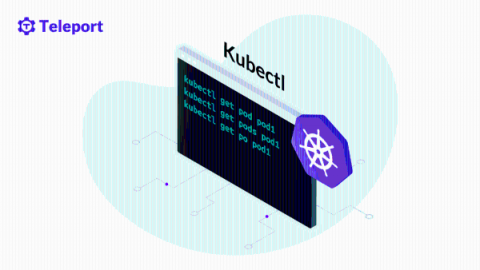
kubectl Cheat Sheet

Kubectl is the default command-line tool for Kubernetes. It makes it easier to use the Kubernetes API and manipulate Kubernetes resources, allowing you to control Kubernetes clusters and run commands to deploy applications, manage cluster resources, and view logs. This guide will look at how best to integrate the most common and useful kubectl commands into your workflows, as well as provide some helpful tools for further optimization.

Spring4Shell extends to Glassfish and Payara: same vulnerability, new exploit

Last week, we announced the discovery of Spring4Shell — a remote code execution (RCE) vulnerability in older versions of the spring-beans package. In our blog post Spring4Shell: The zero-day RCE in the Spring Framework explained, we showed how an old Tomcat exploit for CVE-2010-1622 became relevant again. Due to the nature of the problem, we expected that additional payloads could be created beyond this known Tomcat exploit.

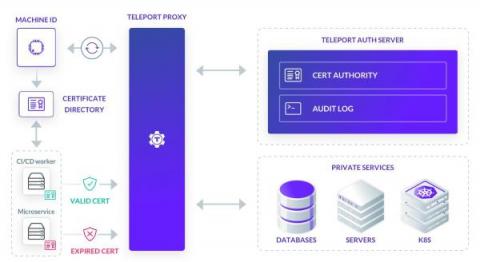
How We Built Machine ID

The DevOps workflow is all about automation driven by machine-to-machine access. To maintain the automated DevOps pipeline, engineers configure service accounts with credentials such as passwords, API tokens, certificates, etc. The issue is that engineers often fall into the security mispractice of creating long-lived credentials for service accounts to facilitate automation and lessen manual intervention.

How to keep your home Wi-Fi network secure

From smartphones to smart fridges, the Internet of Things is producing more and more devices that are meant to be connected to a Wi-Fi network. The average household was expected to own 50 connected devices in 2021, up from just 10 devices the year before. With so many gadgets living on your home network, it’s never been more important to ramp up your Wi-Fi security.

How Human Intelligence Is Supercharging CrowdStrike's Artificial Intelligence

There is a new trope in the security industry, and it goes something like this: To keep yourself safe, you need an AI-powered solution that can act on its own, and to do that, you need to keep those pesky humans away from it. As a practitioner with a track record of bringing AI to cybersecurity — not because marchitecture demands it these days but because of its actual utility to solve security problems — I find this characterization puzzling.