Identiverse 2025 exposed the urgent need for NHI governance. From AI agents to orphaned credentials, NHIs and their sprawling secrets are today’s most overlooked risks.
Online education has grown to be a significant aspect of college life. The internet serves as your classroom, whether you're using Zoom for lectures, Google Classroom for assignments, or Microsoft Teams for group projects. The problem is that as people spend more time online, the likelihood of cyberattacks is increasing. So, how can you learn online without being hurt? Without requiring a degree in computer science, let's explore a comprehensive guide that can help you safeguard your digital identity, gadgets, and personal information.
Cinema has always been a powerful vehicle for storytelling. It carries emotions, identities, and histories across screens large and small, drawing in audiences from vastly different corners of the world. As the film industry becomes increasingly international, the process of making films accessible to global audiences has shifted from a technical afterthought to a strategic imperative. At the center of this transformation lies the question of cultural accessibility-how stories are shared, understood, and appreciated across linguistic and cultural boundaries.
Traditional Public Key Infrastructure represents the established approach to certificate management that has evolved over three decades to support enterprise IT environments. Built on hierarchical certificate authorities (CAs) and manual or semi-automated processes, traditional PKI was designed for relatively static environments with manageable numbers of certificates and predictable lifecycle patterns.
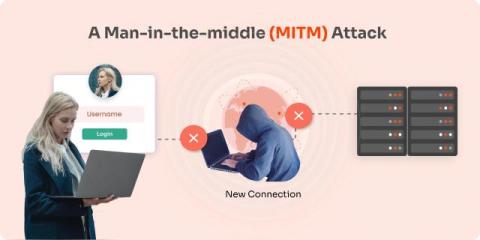
A hacker intercepts or alters data between two parties in man-in-the-middle attacks, which account for 19% of breaches. Data, money and reputation are at stake in the MITM attacks.
Cyber insurance has become essential for digital businesses, but premiums are rising fast. According to S&P Global Ratings, annual cyber insurance premiums are projected to grow by 15–20% through 2026. The more vulnerable your digital assets are, the more likely you are to pay. To keep costs in check, organizations must demonstrate strong and continuous security measures. This requires going beyond basic controls and adopting expert-led, adaptive protection that secures all applications and APIs.
Kubernetes security refers to practices, tools, and configurations that protect Kubernetes clusters and workloads from unauthorized access, vulnerabilities, and runtime threats. It involves securing all components of the Kubernetes environment—including the control plane, worker nodes, pods, container images, networking, and storage.
After years of attending Red Hat Summits, each one seemingly more dynamic than the last, this year’s event in Boston felt especially significant. The energy was electric, the community stronger than ever, and the technology announcements were nothing short of groundbreaking. From AI to virtualization and migration strategies, Red Hat Summit 2025 demonstrated just how far open source innovation has come—and where it’s boldly going next.