Security | Threat Detection | Cyberattacks | DevSecOps | Compliance

Can AI Replace a QSA?

The question circling boardrooms and compliance departments in 2026 is no longer hypothetical: Can AI replace a QSA? After nearly two decades guiding organizations through PCI DSS audits, gap assessments, and remediation programs, the answer is clear — No, AI cannot replace a Qualified Security Assessor in 2026. But it is fundamentally reshaping what being a QSA means, and professionals who ignore that shift do so at their own peril.

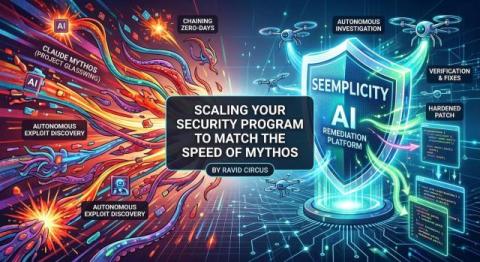
Scaling Your Security Program to Match the Speed of Mythos

Anthropic’s Project Glasswing and the Claude Mythos model represents a fundamental change in the physics of cyber defense. With the gap between patch releases and weaponized exploits shrinking to hours, traditional manual security triage is now obsolete. Organizations must adopt AI-driven automated remediation.

EU AI Act Compliance: Requirements, Risks, and What to Document

→ Audit your AI systems against EU AI Act requirements now — validate Annex IV technical documentation, logging, and data governance. The initial August 2025 compliance date has passed, and full penalties begin in August 2026. → Build a continuous compliance evidence chain — document risk management across the full lifecycle (design, development, deployment, and post-market monitoring).

Rogue AI App Use

HungryClaw… OpenLobster… KrillBox? Shout out to @AlexisGay for shining a light on the fact that shadow IT tools are getting more (shell)fishy—and dangerous—by the minute. According to our own findings, within 90 days of connecting to Vanta, organizations discover ~140 shadow IT tools accessing their environment. That's a lot of claws grabbing at your data. More insights to come! Stay tuned for our new Trust Signals series.

Why Securing AI Code Generation is Critical for AppSec

The revolution is here, but it’s not what we expected. AI coding assistants have transformed software development, with developers shipping code faster than ever before. GitHub Copilot, Amazon CodeWhisperer, and Claude Code have become as essential to modern development as Git itself. The productivity gains are undeniable; what once took hours now takes minutes. But there’s a dangerous blind spot in this revolution: security.

Observability and Security for the AI Era

Datadog has always been driven by a broader vision of helping teams understand and operate complex systems. In this session, you’ll hear from Yanbing Li, Chief Product Officer, and Shri Subramanian, Group Product Manager, as they share the latest updates across the Datadog product suite and discuss how that vision continues to shape the platform’s evolution and support the next generation of AI-driven applications.

A Look At GitGuardian's ML-Powered Contextual EnrichmentAnd Incident Scoring

In this quick introductory video, Mathieu Bellon, Senior Product Manager at GitGuardian, sits down with Dwayne McDaniel, Developer Advocate, to cover some of the advancements GitGuardian has made by integrating machine learning directly into the secrets security platform. Mathieu describes how engineers and responders can save serious time as by automating contextual analysis, geving the humans in the loop with the best information to be able to take an informed action when it comes to secrets leaks. They also discuss the security implications and where teams can look if they want to opt out or bring their own agents.

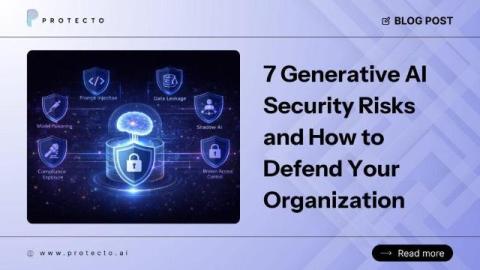
7 Generative AI Security Risks and How to Defend Your Organization

Generative AI creates new attack surfaces that traditional security tools were not designed to address. The biggest generative AI security risks include prompt injection, data leakage, shadow AI, compliance exposure, model poisoning, insecure RAG pipelines, and broken access control. Each one requires a specific defense, not a generic firewall or DLP rule.