Security | Threat Detection | Cyberattacks | DevSecOps | Compliance

Attacking the MCP Trust Boundary

Every secure API draws a line between code and data. HTTP separates headers from bodies. SQL has prepared statements. Even email distinguishes the envelope from the message. The Model Context Protocol (MCP), the fast-growing standard for connecting AI agents to external services, inherits that gap from the models it sits on top of.

Understanding Data Governance in the Age of Generative AI

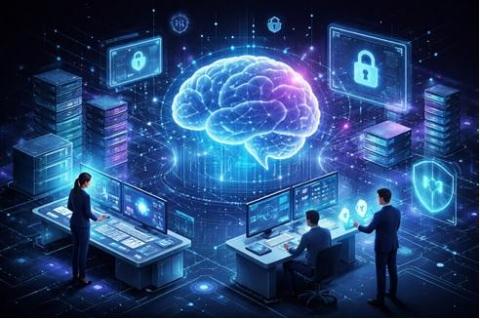
Generative AI is changing how organizations create, process, and distribute information. Tools powered by models from companies like OpenAI and Google can produce content, analyze data, and automate workflows at a scale that wasn't realistic a few years ago. That shift creates opportunity, but it also raises a more grounded concern: how do you control, protect, and manage the data feeding these systems?

Why Brands Use the Same AI Avatar Across Every Campaign Instead of Rotating Influencers

Here is the reason why major consumer brands have historically invested in long-term spokesperson relationships instead of continually changing faces for different campaigns. Recognition builds up. The more an audience sees a person again and again associated with a brand, the more the presenter and the brand become linked in their minds -and each individual advertisement will have to do less work in establishing credibility before delivering the message.

Claude Mythos Just Killed Exploitability as a Security Signal

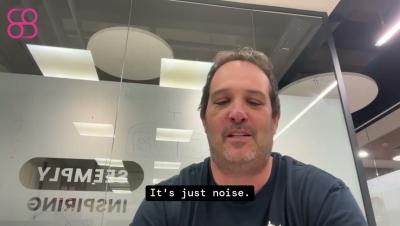
The game has changed. For years, security teams used exploitability to decide what to patch first. If a vulnerability had a known exploit, it went to the top of the list. If not, it waited. But with the arrival of next-gen AI models like Claude Mythos, that strategy is officially broken. In this video, we discuss how Claude Mythos has collapsed the barrier to building working exploits. What used to take real skill and significant time can now be weaponized in minutes. When everything is exploitable, exploitability becomes noise.

The Governance Gap: How the EU AI Act Makes API Security a Compliance Imperative

Your legal team just handed you a 400-page document and said "figure out compliance." The EU AI Act is live, your organization falls under its scope, which is broader than many expect. Even non‑EU companies must comply if their AI systems are used, deployed, or produce effects within the European Union. In practice, that means that global organizations building or integrating AI models cannot treat the Act as a regional regulation.

Types of AI Guardrails and When to Use Them (2026)

The types of AI guardrails are input guardrails, output guardrails, security guardrails, ethical guardrails, and operational guardrails, each positioned at a different failure point across an inference pipeline. Gartner’s research found that 30% of generative AI projects don’t survive past the proof-of-concept stage, with weak risk controls cited as the leading reason. Most of those projects weren’t badly built. The models worked. The gaps were in what sat around them.

Cybersecurity AI Explained: Agentic AI, PQC, and Real-World Security Challenges

At the 2025 RSA Conference, Justin Foster joins Zeus Kerravala to break down where AI in cybersecurity is actually delivering value and where it’s falling short. As security teams deal with growing complexity, many are finding that today’s AI tools create as much friction as they solve. This conversation explores how a shift toward agentic, skills-based AI can help teams move faster, reduce noise, and focus on what really matters.

Navigating the Post-Mythos Landscape with Bitsight

The rise of AI-driven vulnerability discovery using Anthropic's Claude Mythos, as well as similar tools from Google and OpenAI, is completely changing the calculus of cyber risk. The number of vulnerabilities is exploding. The time it takes for exploits to appear is shrinking. The patching cadences and scan intervals, assessments and risk registers that many organizations still rely on are rapidly becoming ineffective.