Security | Threat Detection | Cyberattacks | DevSecOps | Compliance

Zenity Joins CoSAI: Why Agentic AI Standards Need Practitioners at the Table

The agentic AI security standards your enterprise will adopt in the next 18 months are being written right now, inside working groups most CISOs have never heard of. The Coalition for Secure AI (CoSAI), an OASIS Open Project with more than 45 sponsor organizations, including Google, Microsoft, NVIDIA, IBM, and Meta, is producing the frameworks, reference architectures, and secure design patterns that will define how autonomous agents operate inside enterprise environments.

Composable AI Agents and the SOC That Runs Itself

Picture a SOC that investigates its own alerts, hunts threats across customer tenants, isolates compromised endpoints, and writes its own detection rules. Envision the same SOC attacking itself every morning to find the gaps it missed, all before your analysts arrive for the day. This is not a roadmap item, but an operational reality on LimaCharlie. It’s what agentic AI security looks like on a platform built to support it.

Claude Code Cuts SOC Setup to 10 Minutes

Security teams accept that standing up a real SOC requires days of configuration, credential wrangling, and infrastructure work before any actual security engineering begins. With LimaCharlie, actual setup time is closer to ten minutes. It gives valuable time back to SecOps teams by managing infrastructure and simplifying onboarding and operations with Claude Code. Using agentic AI to deploy SOC capabilities means your team spends less time on infrastructure and more on security work.

Everyone Is Securing the Wrong Layer of AI

The AI security market is crowded. Vendors are racing to protect prompts, harden models, detect jailbreaks, and scan for data leakage at the LLM layer. The investment is real. The intent is good. And most of it is missing the point. Here is the problem: agents do not just think. They act. They call APIs. They trigger workflows. They write to databases, send emails, move money, and modify production systems.

How GitGuardian and CyberArk MCP Servers Cut Secrets & Vault Sprawl with AI Automation

Watch the teams of GitGuardian and CyberArk for a demo-first session on how MCP (Model Context Protocol) servers can help you tame secrets sprawl and vault sprawl by letting developers use AI to trigger the right actions, with far less cognitive load! What you’ll learn.

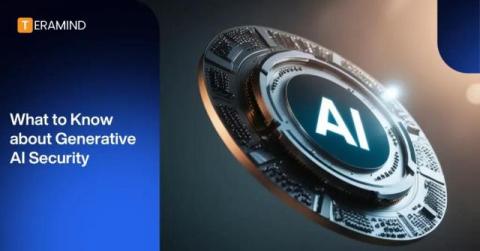
What is Generative AI Security? Types, Risks & Best Practices

Generative AI security is the practice of protecting generative artificial intelligence models, applications, and their underlying training data from cyber attacks, data leakage, and unauthorized access. It focuses on securing both sides of the system—i.e., the AI itself (models, pipelines, APIs) and the sensitive data flowing into and out of it during real-world use.

I Tried 5 Prompt Injection Attacks (Here's What Happened)

In this video, we explore the growing security risk of prompt injection in large language model (LLM) applications. As AI becomes embedded in more products, new vulnerabilities emerge, especially through natural language manipulation. We break down how LLMs work, the importance of system prompts, and demonstrate five real-world prompt injection techniques used to extract sensitive information or bypass safeguards. You’ll see live examples using different models and learn why newer models are more resilient, but still not immune.