Security | Threat Detection | Cyberattacks | DevSecOps | Compliance

What's happening to DevOps Security?

As 2026 rolls on, our capacity to prompt ourselves silly appears to be limitless. We’ve already seen the financial, legal, and reputational damage to Deloitte as they partly refunded the Australian government for a 237-page audit report containing LLM-generated hallucinations like fabricated academic references, fake footnotes, and a false quote attributed to a judge.

Stop Blaming AI for Bad System Design | Fix MCP Security

Every few weeks, a new story surfaces: an AI agent deletes a production database, an autonomous coding tool racks up a five-figure cloud bill, or a chatbot exfiltrates internal documents through a prompt injection attack. The reaction is predictable. “AI is dangerous.” “LLMs can’t be trusted.” “We need better guardrails on the model.” But if you look at the root cause of these incidents, the model is rarely the problem. The system around it is.

Are banks ready for AI-powered cyber threats?

A recent American Banker article, “Knock on wood: Are banks doing enough to cope with Mythos?” raises a timely and uncomfortable question about advanced AI models like Anthropic’s Claude Mythos. As highlighted in the article, INETCO CEO Bijan Sanii points out a critical truth: The conversation is being fueled by the emergence of AI technology capable of identifying software vulnerabilities at a speed and scale that was previously unimaginable.

Snyk Embeds Anthropic's Claude to Advance AI-Powered Security for Software Development

BOSTON, May 7, 2026 — Snyk, the AI security company, today announced it is leveraging Anthropic's Claude models to advance software security in an era of AI-powered development. Starting today, Snyk has integrated Claude into the Snyk AI Security Platform — powering automated vulnerability discovery, prioritization, and developer-ready fixes across code, dependencies, containers, and AI-generated artifacts. The threat driving that integration is real and accelerating.

Agentic AI in security operations: Friend, risk, or both

Agentic AI is forcing a hard question on every security leader: when your SOC is full of autonomous “doers” instead of just dashboards and scripts, is that your new best friend or a brand‑new risk surface you barely understand? The honest answer is both, and the way you design, govern, and deploy these systems will decide which side wins.

AI Security and Trust: Why SOC Teams Don't Trust AI

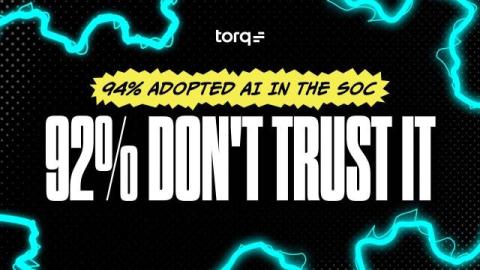
See how Torq harnesses AI in your SOC to detect, prioritize, and respond to threats faster. Request a Demo 92% of security leaders say something is actively reducing their trust in AI within the SOC. These aren’t skeptics, they’re people who have already adopted AI and believe in its ability to enhance security operations. We know from the 2026 AI SOC Leadership Report that AI is already widely adopted in the SOC, with 94% of organizations using it in some capacity.

The New Vanguard: Strategic Leadership in the Age of Autonomous Threats

The threat landscape of 2026 is no longer defined by the singular hacker or the isolated malware strain. We have entered the era of the "Autonomous Adversary"-a period where AI-driven social engineering, automated vulnerability discovery, and polymorphic code are the standard tools of state-sponsored and criminal actors alike. For the security professional, the traditional defensive perimeter has dissolved. To navigate this complexity, the industry is moving away from purely tactical responses toward a model of "Cyber-Resilience and Strategic Governance.".

AI in security feels harder than it is

Anyone who's stood up a SIEM from scratch knows the feeling: weeks of infrastructure work, integration headaches, and a services team alongside for the whole process. That experience shaped how people think about adopting anything new in security ops. The instinct is to treat AI the same way: budget for it, plan for it, bring in specialists. This instinct is costing teams real time. Traditional infrastructure takes great effort to stand up. Infrastructure-as-code happens in seconds.

Designing AI workflows: principles for safety and control

Most teams adopting AI in their workflows understand that LLMs do not behave like traditional software. The same input does not always produce the same output, and even when it does, the model can be wrong, manipulated, or misled. Hallucinations happen even without adversarial input. Air Canada learned this in 2024 when a tribunal ordered the airline to honor a bereavement-fare refund policy its support chatbot had invented out of thin air.