Security | Threat Detection | Cyberattacks | DevSecOps | Compliance

When Defense becomes Dialogue: The Problem with LLM Security

For about thirty years, security has rested on the assumption that the measures guarding your systems do not have opinions. A firewall does not care how politely you ask it to open a port. An SQL filter does not weigh the context of a query before deciding whether to pass it through. An authentication check does not get distracted or talked round. You either present the right credential or you do not, and the answer is the same every time you ask.

The AI Inflection Point That Will Redefine Software Trust

Every few years, something enters the market that doesn’t just change the conversation — it restructures the underlying assumptions of an entire industry. The rapid advancement of AI systems purpose-built for software and security workflows is one of those moments. And I think most of the market is still misreading what it actually means. There will be no shortage of takes. Some will declare that AI has finally “solved” software security.

The Mythos Effect and the End of "Business as Usual" for Security Operations and Risk Management

Something fundamentally shifted in cybersecurity. Claude Mythos, Anthropic’s frontier AI model, signaled the arrival of what the Cloud Security Alliance called an “AI vulnerability storm,” a world where vulnerabilities are discovered and exploited at machine speed. This is a compression event, collapsing timelines, expanding attack surfaces, and forcing a rewrite of how organizations think about security operations, software development, risk, and ultimately, business survival.

How to Monitor MCP Usage: A 10-Step Security Checklist for 2026

What you need to know: MCP can evade traditional DLP, IAM, and SIEM controls because agent traffic looks like authorized API calls, sensitive data is semantically transformed before it leaves the perimeter, and exfiltration happens through tool invocations rather than file transfers.

Cyberhaven Analyst Plugin: AI-Assisted Security Investigation in Claude Code and Codex

Security teams have a data problem. Not a shortage of data, but instead there is a growing data surfacing problem. The signals are there, the incidents are logged, and the classifications exist. But, getting from raw data to a prioritized action plan still requires close to an hour of manual querying, tab-switching, and context reconstruction, every single time. The Cyberhaven Analyst Plugin changes that.

Agentic AI in security operations: Friend, risk, or both

Agentic AI is forcing a hard question on every security leader: when your SOC is full of autonomous “doers” instead of just dashboards and scripts, is that your new best friend or a brand‑new risk surface you barely understand? The honest answer is both, and the way you design, govern, and deploy these systems will decide which side wins.

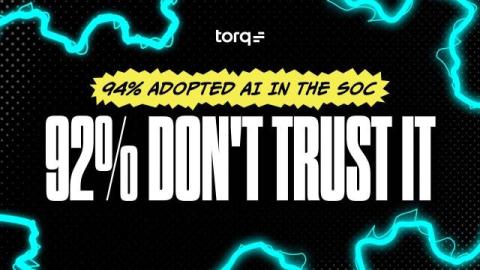
AI Security and Trust: Why SOC Teams Don't Trust AI

See how Torq harnesses AI in your SOC to detect, prioritize, and respond to threats faster. Request a Demo 92% of security leaders say something is actively reducing their trust in AI within the SOC. These aren’t skeptics, they’re people who have already adopted AI and believe in its ability to enhance security operations. We know from the 2026 AI SOC Leadership Report that AI is already widely adopted in the SOC, with 94% of organizations using it in some capacity.

Credential management for AI agents

The proliferation of credentials outside centralized visibility and control is known as “credential sprawl,” and attackers are eager to take advantage of it. Unfortunately, credential management is a broad problem that only grows in complexity as organizations add new tools, employees, and partners.

How to Detect Shadow AI

In 2026, the gap between AI adoption and AI oversight has become a primary boardroom concern. While generative AI has supercharged productivity, it has also introduced Shadow AI: the unmanaged, invisible use of unauthorized AI apps and autonomous agents that operate outside the view of traditional IT security. In this guide, you’ll learn why Shadow AI is exponentially harder to detect than Shadow IT and, more importantly, how to build a modern detection framework. We’ll explore.