Mailchimp
Not subscribed to OpsMatters Newsletter


When it comes to understanding the difference between open source software vulnerabilities and malicious threats, it’s helpful to think in terms of passive vs. active threats. Vulnerabilities can be attacked and exploited, but in a vacuum don’t pose a threat. Malicious threats are different —– they involve a threat actor actively planning to attack you.
This blog is part three in a series about secure access to Amazon RDS. In Part 1, we covered how to use OSS Teleport as an identity-aware access proxy to access Amazon RDS instances running in private subnets. Part 2 explained implementing single sign-on (SSO) for Amazon RDS access using Okta and Teleport. In Part 3, we will guide you through the steps to configure privilege escalation for just-in-time access requests for Amazon RDS access.
I’m happy to announce that 1Password has joined the FIDO Alliance to help build safer, simpler, and faster login solutions for everyone. In fact, we’re already on our way … keep reading for a sneak peek at the future of authentication in 1Password.
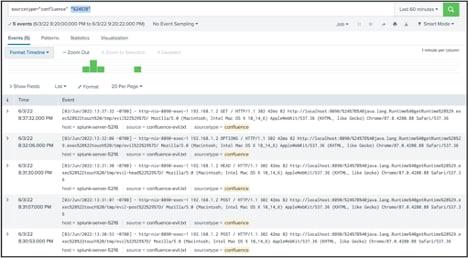
A new zero day vulnerability actively exploited in the wild has been found in Atlassian Confluence. The vulnerability CVE-2022-26134 affects all supported versions of Confluence Server and Confluence Data Center allowing an unauthenticated user to run arbitrary commands remotely. The Atlassian team confirmed the vulnerability with an official tweet and then also published a security advisory to update its customers.
If you want just to see how to find evidence of the Atlassian vulnerability in your Confluence systems, skip down to the “detections” sections. Otherwise, read on for a quick breakdown of what happened, how to detect it, and MITRE ATT&CK mappings.
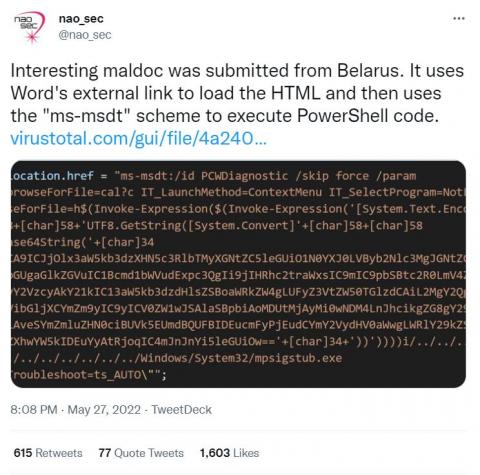
Follina—while we’re sure this commune in Italy is lovely, the same can’t be said about this new vulnerability by the same name for InfoSec folks. Thanks to a zero-day bug in the Microsoft Support Diagnostic Tool, Follina is now making the headlines but for all the wrong reasons. This blog talks in detail about the zero-day vulnerability in Microsoft Support Diagnostic Tool (MSDT), popularly known as Follina.