Mailchimp
Not subscribed to OpsMatters Newsletter


As mentioned in Wikipedia: “A bug bounty program is a deal offered by many websites, organizations and software developers by which individuals can receive recognition and compensation for reporting bugs, especially those pertaining to security exploits and vulnerabilities”. For instance, Company ‘A’ wants to audit/test it’s apps i.e., web & mobile apps for security vulnerabilities & bugs, it will have two options.
A good log management solution powers observability for security, engineering, IT and compliance teams. But with so many options available, how do you choose the right one? When evaluating potential log management solutions, start by asking these 10 questions to find the right balance of security, performance and value based on your requirements — and to reveal any limitations that could potentially hold you back.
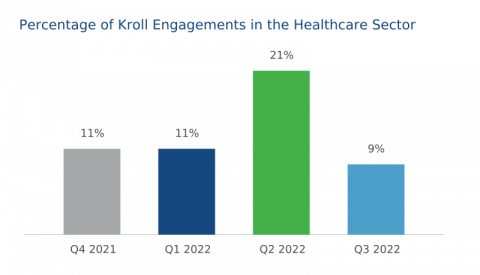
A review of recent Kroll incident response cases consistently proves that the healthcare industry is one of the most frequently targeted sectors. This observation mirrors what is experienced by national cybersecurity agencies as multiple warnings have been launched during 2022, highlighting how ransomware gangs and nation state actors are now aggressively targeting healthcare institutions.
Controlling and filtering traffic when containerizing a workload within Kubernetes Pods is just as crucial as a firewall in a more traditional network setup. The difference is that, in this scenario, those capabilities are provided by the Kubernetes NetworkPolicy API. This article will explore Kubernetes NetworkPolicy by creating an example network policy and examining its core parameters. Then, we’ll look at some common NetworkPolicy use cases and learn how to monitor them using kubectl.
Personal data such as email addresses and passwords unlock our online identities and have become part and parcel of almost all accounts on the internet. Research indicates that there are over 5 billion daily web users worldwide and mobile phones account for about 60% of the world’s web traffic. Digital data examples include text messages, videos, satellite images and data from IoT, smart devices and social media.