Mailchimp
Not subscribed to OpsMatters Newsletter


On the 31st of May 2023 a public warning was issued by MOVEit, regarding a critical SQL injection vulnerability found in in their systems. This vulnerability allowed malicious actors to gain access to the database. The flaw, known as CVE-2023-34362, was identified on the 2nd of June, but it had already been exploited four days before the alert. By the end of May, approximately 2,500 instances of MOVEit file transfers were discovered to be exposed online, primarily in the United States.
Kroll has analyzed incidents throughout Q1 2023 where drive-by compromise was the initial infection vector for GOOTLOADER malware. It is likely that the threat actors are utilizing SEO to drive individuals to either their own malicious website or to infected WordPress sites. These sites are then used to host documents that would be attractive to employees within the legal and professional services sectors.
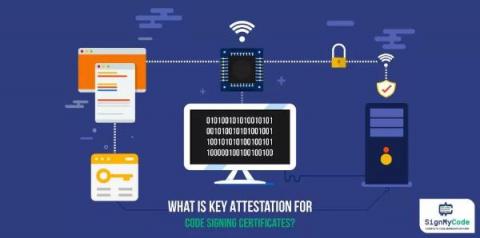
A lot has changed in the world of Code Signing since the month of June. And you must be curious about it too! The blog will explain key attestation, supporting hardware, and the pros and cons of using this method to deliver code signing certificates. New guidelines for distributing code signing certificates went into effect on June 1, 2023, to increase security. One of the most significant improvements requires the delivery of certificates using safe Hardware Security Modules (HSMs.
Despite the security controls that OpenAI has imposed on ChatGPT to try to make it a secure space capable of assisting users in a variety of tasks, cybercriminals have managed to exploit this technology for malicious purposes. Recent research has shown that this generative artificial intelligence is capable of creating a new branch of polymorphic malware with relative ease. The main risk lies in ChatGPT's versatility, which allows it to create code that could easily be used for malware.
Zero Trust has been a concept since 2009 when Forrester first realized that traditional security models operated on the outdated assumption that everything inside an organization’s network should be trusted. 14 years later, the rule of “Never Trust, Always Verify” has never been more important, especially as data breaches continue to make headlines on a seemingly daily basis.
New data shows that even with the majority of organizations experiencing cyber attacks, three hours of security awareness training simply isn’t enough.
Using an external platform trusted by potential victims is proving to be a vital tool in the cybercriminal’s arsenal. New data shows the state of the threat and who’s at risk. The average business experienced around 81 social media attacks each month in Q1 of this year, according to new data from PhishLabs, increasing 12% over Q4, 2022 and 5% over Q1 of 2022.
Using credibility-building imagery and creating a need for the user to click what may or may not be perceived as an image is apparently all it takes to engage potential phishing victims. Phishing attacks only need two things: something to create a sense of urgency and something to establish a sense of credibility.
There are many ways to be socially engineered and phished, including email, websites, social media, SMS texts, chat services, phone calls and in-person. These days, it is hard to sell something online, date or rent a vacation home without being scammed. Scams are everywhere! If there is a way to communicate between two parties, some scammer will try to take advantage of it.
Build a developer portal from scratch with Backstage, an open platform. In this tutorial, learn how to create a secure-by-default software catalog for bootstrapping GitHub projects.