Security | Threat Detection | Cyberattacks | DevSecOps | Compliance

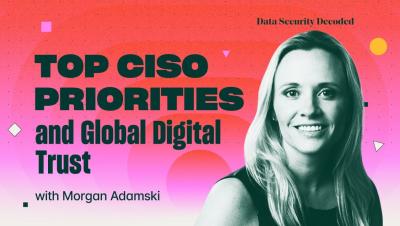
The New CISO Podcast Ep.134 - Evan Ferree | From Breach to BISO: Becoming a Security Influencer

Most security professionals know what a CISO does. But what about a BISO? And why are Fortune 500 companies increasingly creating this executive role? In this episode of The New CISO Podcast, host Steve Moore sits down with Evan Ferree, Staff Vice President and Business Information Security Officer at a Fortune 50 company, to decode one of cybersecurity's most misunderstood leadership positions. What You'll Learn.

Unlock success: Powerful strategies for integrating ESG into GRC for sustainable compliance

The modern business landscape is evolving rapidly with increasing expectations from investors, regulators, and consumers alike. Today, environmental, social, and governance (ESG) considerations are no longer optional; they have become a critical piece of corporate strategy. However, aligning these initiatives with governance, risk management, and compliance (GRC) frameworks can be a challenge.

CloudCasa Now Supports NFS Backup Targets - More Flexibility for Kubernetes Environments

CloudCasa for Kubernetes just got more versatile. In addition to object storage targets such as Amazon S3, Azure Blob, and other S3-compatible platforms, CloudCasa now supports NFS (Network File System) as a backup destination. This enhancement gives organizations even greater flexibility when choosing how and where to store their Kubernetes backups — whether in the cloud, on-premises, or both.

Closing the credential risk gap for AI agents using a browser

AI agents increasingly are completing real tasks in the browser, acting on behalf of employees, and connecting to the same systems humans rely on to get work done. This introduces a new security problem: AI agents require credentials – passwords, API keys, and one-time codes – to operate. As agents proliferate, the risk surface increases and it brings a variety of identity and access management challenges.

Quantum Computing and How it Breaks RSA | Ep. 1 - Quantum Learning Series

On October 7, 2025, the Nobel Prize in Physics was awarded to John Clarke, Michel H. Devoret, and John M. Martinis for their work with superconducting circuits and Josephson junctions—experiments that proved quantum mechanics can govern entire electronic systems, not just individual particles. Their discoveries laid the foundation for today’s quantum computers. Quantum computing is now redefining what’s possible in data security. In Episode 1 of the Quantum Learning Series, we explore what quantum computing really is—and why it poses such a powerful threat to modern encryption.

Managed DDoS Protection for SaaS Companies: Ensuring Availability, Security, and Business Continuity

SaaS companies face a 20% yearly likelihood of a significant DDoS attack, according to the Indusface State of Application Security H1 2025, underlining the risks to uninterrupted operations. Even brief downtime can have severe consequences. On average, a DDoS attack requires 12 hours for monitoring, analysis, and mitigation, translating to roughly 2.4 hours of annual downtime per SaaS application. This can disrupt workflows, breach SLAs, and erode customer trust.

How Risk Scores Are Assigned to Threats: Understanding the Metrics That Drive Security Decisions

Here’s the reality: Most organizations are drowning in threat alerts, vulnerability reports, and security incidents. Security teams can’t tackle everything at once, yet the leadership keeps asking “What should we prioritize?” Without proper risk scoring, you’re essentially playing cybersecurity roulette with your business assets.

How Traditional eQMS Holds Your Organization Back

In the era of digital transformation, businesses increasingly rely on Electronic Quality Management Systems (eQMS) to manage quality and ensure regulatory compliance. But many companies still operate on legacy eQMS platforms that were once effective but now hinder growth and efficiency. These traditional systems are often rigid, siloed, and fail to meet the demands of a fast-paced, data-driven environment.

Social Engineering in Cybersecurity: Latest Threats and Protection Methods

Technical defenses keep evolving but attackers have learned that people are often the weakest link. Social engineering has quietly outpaced many technical intrusions because it reliably targets human behavior rather than firewalls or intrusion detection systems. 2025 Verizon Data Breach Investigations Report highlights that social engineering remains one of the top three breach patterns, with phishing and pretexting consistently leading incident categories.