Security | Threat Detection | Cyberattacks | DevSecOps | Compliance

PCI DSS Requirement 8 - Changes from v3.2.1 to v4.0 Explained

In our ongoing series of articles on the Payment Card Industry Data Security Standard (PCI DSS), we’ve been examining each requirement in detail. Today, we turn our attention to Requirement 8: Identify Users and Authenticate Access to System Components. This requirement is built on two fundamental principles User identification and authentication,1) identifying individuals or processes on a system and 2) verifying their authenticity.

Data-driven Strategies for Effective Application Risk Management in 2024

Insecure software is significantly impacting our world. In a recent statement, CISA Director Jen Easterly declared: “Features and speed to market have been prioritized against security, leaving our nation vulnerable to cyber invasion. That has to stop... We are at a critical juncture for our national security.”

Fake Data Breaches: Why They Matter and 12 Ways to Deal with Them

As a Chief Information Security Officer (CISO), you have the enormous responsibility to safeguard your organization’s data. If you’re like most CISOs, your worst fear is receiving a phone call in the middle of the night from one of your information security team members informing you that the company’s data is being sold on popular hacking forums.

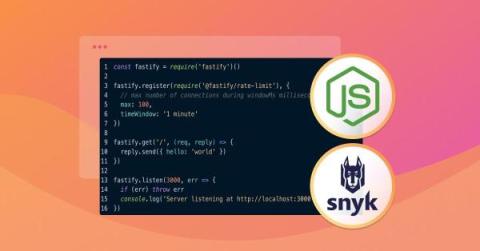
5 Node.js security code snippets every backend developer should know

As backend developers, we are tasked with the crucial role of ensuring the security of our applications. Node.js is not exempt from this responsibility and its growing popularity makes it a lucrative target for hackers, making it imperative to follow best security practices when working with Node.js. In this blog post, we will be exploring some essential Node.js security code snippets every backend developer should know in 2024.

Busting the SugarLocker Syndicate: Syndicate's Secrets and Takedown Tactics

Sugarlocker Summary On February 23, 2022, the operator linked to the SugarLocker ransomware, utilizing the pseudonym "gustavedore," was conspicuously seeking new partnerships on the Dark Web. SugarLocker operates through a highly flexible Ransomware-as-a-Service (RaaS) framework, facilitating extensive customization for its users in the clandestine corners of the Dark Web.

Why MobSF Isn't Ideal for Application Security Testing?

Mobile Security Framework (MobSF), launched by OWASP in 2015, is a partially automated, open-source, all-in-one mobile application (Android/iOS/Windows) pen-testing framework capable of performing static, dynamic, and malware analysis. MobSF is one of the most widely used security applications where the testing framework - a simple, flexible, and incredibly powerful tool has quickly become the lingua franca of security. The flexibility and accessibility of the tool are helpful but also dangerous.

How to prevent credential stuffing in 3 steps (e.g. naz.API)

Credential stuffing is a cyberattack method where attackers use lists of compromised user credentials to breach into a system. These credentials, often obtained from previous data breaches and available on various dark web forums, include combinations of usernames, email addresses, and passwords.

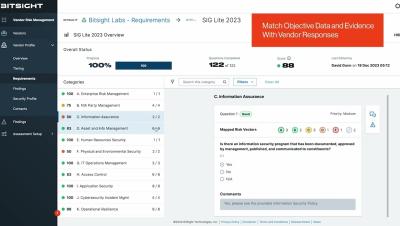
Bitsight Vendor Risk Management Walkthrough

Streamline Assessments, Monitor Vendors, and Validate Security Posture with Ease. No more manual workflows or toggling between tools—with Bitsight VRM, part of the industry’s first end-to-end third-party risk management solution, you can effortlessly navigate through risk assessments and continuous monitoring with just a flip of a switch. Discover a new level of clarity and efficiency with instant access to an ever-growing network of 40,000+ vendor profiles. Track onboarding and validate questionnaire responses with objective data to make informed decisions and expedite risk mitigation.

7 Smart Steps to Run Serverless Containers on Kubernetes

Serverless containers mark a notable evolution from traditional containerization. Traditional containers, being continuously active, can lead to resource wastage. Serverless containers, however, are ephemeral and operate on-demand. For developers, this means less time spent on server management and more on coding. Kubernetes, or K8s, stands out in automating, scaling, and managing these containerized applications.