Security | Threat Detection | Cyberattacks | DevSecOps | Compliance

OPA Design Patterns: Offline Configuration Authorization

An OPA design pattern, as detailed in a previous post, gives you an architectural solution to solve one or more common policy problems. In this blog post, we describe what we call the Offline Configuration Authorization design pattern for OPA. Remember that each OPA design patterns covers the following information.

What we learned at KubeCon + CloudNativeCon Europe 2022: From presentations to accolades

It was a busy week last week at KubeCon +CloudNativeCon Europe 2022 in Valencia, Spain. It seemed like the entire world related to Kubernetes came together after two years of being apart. It was fulfilling meeting up with our peers and gaining market insight- face-to-face. Catalogic’s core messaging this year has revolved around cyber-resilience for data protection.

Introducing our brand new (and free!) Calico Azure Course

Calico Open Source is an industry standard for container security and networking that offers high-performance cloud-native scalability and supports Kubernetes workloads, non-Kubernetes workloads, and legacy workloads. Created and maintained by Tigera, Calico Open Source offers a wide range of support for your choice of data plane whether it’s Windows, eBPF, Linux, or VPP. We’re excited to announce our new certification course for Azure, Certified Calico Operator: Azure Expert!

Shift left is only part of secure software delivery

We’re living in the age of accelerated consumption and delivery. You can get a seemingly infinite selection of products delivered to your door within two days, for free, from thousands of miles away. You can access an endless variety of services online within mere seconds: Movies, music, games, education and even health care. These modern marvels are afforded to us by relatively recent advances in software development, delivery and operations.

Mitigating controls for cloud-native applications: Why you need them and how Calico Cloud can help

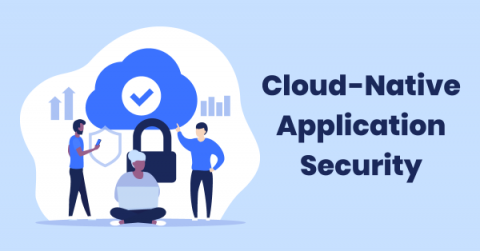
Fixing vulnerabilities can be hard—especially so for cloud-native applications. Let’s take a deeper look at why this is, and how mitigating controls can help secure your cloud-native applications.

Scaling Open Policy Agent: Styra DAS vs. DIY OPA

Enterprises are shifting rapidly to the cloud in order to increase scalability, improve efficiency and lower their costs. In the process, every company has become a software company — constantly building and updating new software — while the cloud has radically transformed how software is built. Oftentimes, the modern cloud-native application will be made up of several (or hundreds of) microservices, while being hosted on dynamic scaling platforms like Kubernetes.

Taking policy management to the edge (and how it's different from the cloud)

Most enterprises are well on their way towards a cloud operating model. Many have moved significant parts of their applications to one (or more) public clouds. Yet, many resources will never be destined for a central public cloud — and for good reason. We now see two factors that affect where and how many resources will ultimately be deployed (hint: it’s at the edge).

Trends at Blackhat Asia 2022 - Kubernetes, Cloud Security and more

This week BlackHat Asia 2022 took place in hybrid mode. It’s one of the most important events within the #infosec community, where security experts show how far they can go. In this edition, the trend of talks and tools focused on improving the security of Kubernetes, Cloud Security or Supply Chain, either from the perspective of the blue team or the red team.

Spotting Log4j traffic in Kubernetes environments

Editor’s note: This is the latest in a series of posts we have planned over the next several weeks where we explore topics such as network monitoring in Kubernetes, using sidecars to sniff and tunnel traffic, show a real-world example of detecting malicious traffic between containers, and more! Please subscribe to the blog, or come back for more each week.