Security | Threat Detection | Cyberattacks | DevSecOps | Compliance

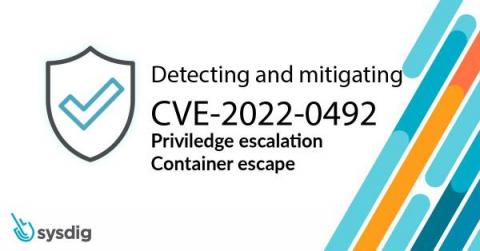
How to detect the containers' escape capabilities with Falco

Attackers use container escape techniques when they manage to control a container so the impact they can cause is much greater. This’s why it is a recurring topic in infosec and why it is so important to have tools like Falco to detect it. Container technologies rely on various features such as namespaces, cgroups, SecComp filters, and capabilities to isolate services running on the same host and apply the least privileges principle.

How to secure Kubernetes Ingress?

Ingress aims to simplify the way you create access to your Kubernetes services by leveraging traffic routing rules that are defined during the creation of the Ingress resource. This ultimately allows you to expose HTTP and HTTPS from outside the Kubernetes cluster so you no longer need to expose each service separately—something that can be expensive and tedious as an application scales, resulting in an increase in services.

Learn OPA Performance on Styra Academy

Styra Academy, our online training portal for free courses on OPA, Rego and Styra Declarative Authorization Service (DA), has a new course available: OPA Performance. The primary purpose for OPA within applications is, of course, fine-grained authorization — that is, who can do what and what can do what. Each user request typically requires one or more authorization decisions to be made.

Enforcing Cloud Resource Policy Guardrails for HashiCorp Terraform Cloud

I’m excited to announce the Styra DAS integration with HashiCorp Terraform Cloud via run tasks is now generally available to Styra DAS users! Users can now enforce cloud resource policy guardrails at every step of the DevOps process, including right before Terraform Cloud applies changes to your cloud resources.

Definitive Guide to Kubernetes Admission Controller

Kubernetes Admission Controller is an advanced plugin for gating and governing the configuration changes and workload deployment in a cluster. Admission Controller enables DevOps and Security personnel to enforce deployment requirements and restrictions in the cluster upon every workload start and any configuration change. Think of an Admission Controller as an Advanced Resource manager with a shield.

Securing SSH on EC2: What are the real threats?

Every compliance audit will ask you to secure SSH, and every time a scanner checks the configuration or CSPM of your cloud account you’ll be warned for it. For example, if you don’t secure SSH on EC2, you’ll certainly get a critical alert stating that one of your Security Groups has its SSH port (22) open to the world. When this happens, you may think: Have I been pwned?

Securing cloud workloads in 5 easy steps

As organizations transition from monolithic services in traditional data centers to microservices architecture in a public cloud, security becomes a bottleneck and causes delays in achieving business goals. Traditional security paradigms based on perimeter-driven firewalls do not scale for communication between workloads within the cluster and 3rd-party APIs outside the cluster.

How to secure Kubernetes Pods post-PSPs deprecation

Kubernetes pods are the basic building blocks of Kubernetes. It's managing one or more tightly coupled application containers allowing them to share resources and networks. Pods are hosted on nodes, which are either physical or virtual machines. When defining a Pod we need to think not only about how much CPU or memory we want to assign to it but also about what would be the interaction between it and the underlying infrastructure.