Managed DDoS Protection for SaaS Companies: Ensuring Availability, Security, and Business Continuity

SaaS companies face a 20% yearly likelihood of a significant DDoS attack, according to the Indusface State of Application Security H1 2025, underlining the risks to uninterrupted operations. Even brief downtime can have severe consequences. On average, a DDoS attack requires 12 hours for monitoring, analysis, and mitigation, translating to roughly 2.4 hours of annual downtime per SaaS application. This can disrupt workflows, breach SLAs, and erode customer trust.
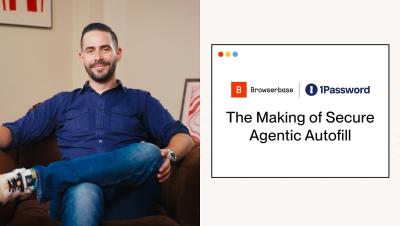
Securing AI agent access to credentials: the making of 1Password Secure Agentic Autofill

Enabling AI agents to securely use credentials in a browser is a challenging problem to solve. In this video, 1Password Head of Ecosystems and Partnerships Dennis Kromhout van der Meer discusses these challenges and the steps 1Password took to ensure that agents and LLMs never have access to your credentials when using Secure Remote Autofill.

SonicWall Concludes Investigation Into Incident Affecting MySonicWall Configuration Backup Files

On September 17, 2025, SonicWall released a knowledge base article detailing the exposure of firewall configuration backup files stored in certain MySonicWall accounts. As of October 8, 2025, the investigation has concluded and SonicWall has updated their advisory accordingly.

Discover What's New in NAKIVO Backup & Replication v11.1

NAKIVO Backup & Replication v11.1 features an expanded multilingual interface, enhanced support for Proxmox VE, automated real-time replication failover and setup, along with granular physical backups and improved Direct Connect for MSPs. Watch this video to explore the works and benefits of the latest capabilities introduced in NAKIVO Backup & Replication.

The New CISO Podcast Ep.134 - Evan Ferree | From Breach to BISO: Becoming a Security Influencer

Most security professionals know what a CISO does. But what about a BISO? And why are Fortune 500 companies increasingly creating this executive role? In this episode of The New CISO Podcast, host Steve Moore sits down with Evan Ferree, Staff Vice President and Business Information Security Officer at a Fortune 50 company, to decode one of cybersecurity's most misunderstood leadership positions. What You'll Learn.

Securing AI agents: privileged machine identities at unprecedented scale

Earlier in 2025, an AI agent named Claudius made headlines when it insisted it was human, promising to deliver products in “a blue blazer and red tie.” Quirky? Sure. But beneath the strange admission sat a more important truth: today’s AI agents aren’t just chatbots with puppet-like ambitions, whose untruths would be betrayed by a growing nose. They’ve evolved into actors with real credentials, access, and autonomy.

Fireblocks Trust: Qualified Custody and Proven Security Built for Institutional Scale

When it comes to safeguarding digital assets, institutions require optionality: secure digital assets self-custody for day-to-day control, and access to qualified custody when regulatory or fiduciary obligations demand it. All delivered through integrated, trusted infrastructure.

Quantum Computing and How it Breaks RSA | Ep. 1 - Quantum Learning Series

On October 7, 2025, the Nobel Prize in Physics was awarded to John Clarke, Michel H. Devoret, and John M. Martinis for their work with superconducting circuits and Josephson junctions—experiments that proved quantum mechanics can govern entire electronic systems, not just individual particles. Their discoveries laid the foundation for today’s quantum computers. Quantum computing is now redefining what’s possible in data security. In Episode 1 of the Quantum Learning Series, we explore what quantum computing really is—and why it poses such a powerful threat to modern encryption.

Incident Command Systems: How To Establish an ICS

Standardizing the management and coordination of incident response and resolution activities across different independent agencies is challenging. As part of its mission to help people before, during, and after disasters, the Federal Emergency Management Agency (FEMA) created the Incident Command System (ICS) as one of the components of the National Incident Management System (NIMS).