CVE-2026-21643: Critical SQL Injection in FortiClientEMS

On February 6, 2026, Fortinet released fixes for a critical vulnerability in FortiClientEMS, tracked as CVE-2026-21643. The flaw arises from improper neutralization of special elements used in SQL commands in the FortiClientEMS GUI (web interface) that can allow an unauthenticated remote threat actor to execute unauthorized code or commands.

When Do U.S. State Privacy Laws Apply? Scope and Thresholds Explained

While the objective of protecting personal data is to be lauded, the current setup in the US is one of the most complex in the world. Twenty states. Twenty different thresholds and definitions. ‘Sale’ means one thing in California, another in Virginia. Tracking 275 daily website visitors puts you in scope for CCPA/CPRA, but not Tennessee’s law. 274 keeps you out of both. Just determining if a law even applies has become a legitimate challenge for businesses.

CVE-2026-1731: Unauthenticated OS Command Injection Vulnerability in BeyondTrust Remote Support and Privileged Remote Access

On February 6, 2026, BeyondTrust released fixes for a critical vulnerability affecting BeyondTrust Remote Support (RS) and Privileged Remote Access (PRA), tracked as CVE‑2026‑1731. This vulnerability allows unauthenticated remote threat actors to execute operating system commands in the context of the site user via specially crafted requests.

PCI DSS Requirements for Gaming & iGaming: When 6.4.3 and 11.6.1 Apply to Your Payment Flows

Ask five compliance leads in the gaming industry how 6.4.3 applies to their payment flows, and you’ll get five different answers. Ever since PCI v4.0.1 has come into effect, gaming and iGaming operators have been struggling to identify where they fall in scope, which SAQ paths apply to their specific architecture, and if Requirement 6.4.3 and 11.6.1 apply to them or their payment processors.

How to Prevent Prompt Injection in AI Agents

In agentic architectures, model behavior is guided by a combination of system prompts, retrieved context, and tool-related inputs rather than a single instruction source. When signals conflict or include untrusted instructions, models must infer which inputs to follow. This ambiguity exposes an opening for prompt injection attacks.

Managed EDR: How It Works, Where It Delivers Value, and Where It Falls Short

Endpoint threats no longer appear with warning signs. They now blend into normal activity, making detection difficult. Once inside, these threats move quietly across systems without being noticed. By the time security teams notice them, damage is already done. This shift has led to the rise of Endpoint Detection and Response. But EDR alone was not sufficient in many cases. This is when Managed EDR was introduced to fill that gap.

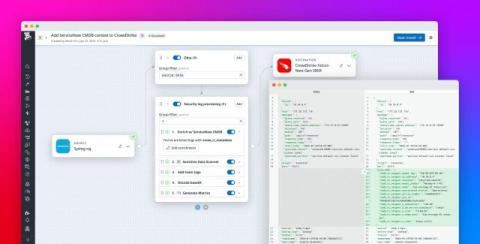
Enrich logs with ServiceNow CMDB context before routing to any SIEM or logging tool

Many DevOps and security teams rely on ServiceNow CMDB (Configuration Management Database) as the system of record for metadata about infrastructure assets, application and service ownership, and dependencies. ServiceNow CMDB captures which team owns each service, what business unit the service supports, the environment where it runs, and how assets relate to each other.

How Data Lineage Improves Data Labeling and Classification

For many security teams, data labels create more friction than clarity. Analysts are buried in alerts driven by labels they don’t fully trust. Files are marked “sensitive” with little explanation and important context is missing. As a result, investigations often turn into manual triage exercises, with teams jumping between logs and tools just to determine whether an alert reflects real risk or harmless activity.