Maintaining Security Consistency from Endpoint to Workload and Everywhere in Between

In today’s fast-paced world, mobility, connectivity and data access are essential. As organizations grow and add more workloads, containers, distributed endpoints and different security solutions to protect them, security can quickly become complex. Modern attacks and adversary tradecraft target vulnerable areas to achieve their objectives. Threats can originate at the endpoint to attack the cloud, or cloud-based threats can attack vulnerable endpoints.

Cybersecurity Risk Management: Introduction to Security Analytics

It’s mid-morning. You’re scanning the daily news while enjoying a coffee break. You come across yet another headline broadcasting a supply chain data breach. Your heart skips a quick, almost undetectable, beat. You have the technology in the headline in your stack. You set aside your coffee and begin furiously scanning through the overwhelming number of alerts triggered across all your technologies.

How to Configure SSO for AWS Resources with Okta and SAML

This blog is part of a series on how to provide identity-based access to AWS resources. In the first tutorial, we saw how to set up an identity-aware AWS bastion host using the OSS solution, Teleport. In this blog, we will expand the scenario to use a single-sign-on (SSO) authentication mechanism to issue certificates to specific groups of users to access AWS resources.

Security updates to cover your entire attack surface

Detectify’s Surface Monitoring is the easiest way to monitor and manage your attack surface on the market. This product continuously monitors the configuration and attack surface of your domains and subdomains. It came from the realization that Application Scanning, our other product, is very detailed. Application scanning tries to find every nook and cranny of your application through crawling and fuzzing which is exactly what companies need for custom-built applications.

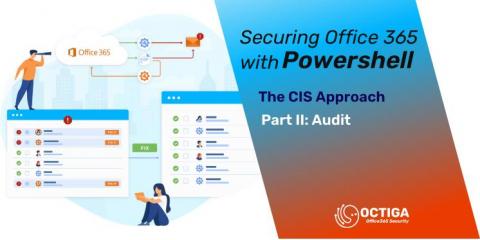
Secure Office 365 with PowerShell via the CIS approach - Pt 2

This is the second blog in a multi part series helping admins, service providers, consultants and security admins to check and achieve a level of security control in Office 365. Part 1 of this series covered the basic PowerShell commands for Authentication through CIS, here we will talk about ‘Audit’.

Digital Forensics Basics: A Practical Guide for Kubernetes DFIR

Containerization has gone mainstream, and Kubernetes won out as the orchestration leader. Building and operating applications this way provides massive elasticity, scalability, and efficiency in an ever accelerating technology world. Although DevOps teams have made great strides in harnessing the new tools, the benefits don’t come without challenges and tradeoffs.

Privacy and the death of security, what security teams need to know

As people start coming back to the office after working from home exclusively for two years, a hybrid work model will pose a series of challenges for security teams. One of these challenges involves reminding and reeducating workers about security best practices after two years of working remotely and using decentralized services.

Building a secure GraphQL API with Node.js

GraphQL provides security straight out of the box with validation and type-checking. However, it doesn’t fully address security concerns around APIs. In this article, we’ll learn how to secure GraphQL APIs by building a simple Node.js application using Fastify and GraphQL. According to its official documentation, GraphQL is a graph query language for APIs and a runtime for fulfilling those queries with our data.

The Security Community Needs to Take a Long, Hard Look in the Mirror

The security community took a step backward last week in our ability to deal with the crisis involving Okta. Instead of exercising well-thought-out and practiced contingency plans to objectively assess risk, many individuals took a trolling posture on social media. The reaction was neither professional nor conducive to our mission as defenders against threat actors seeking to do us harm.