Web Design Mistakes That Hurt Conversions and How to Fix Them

Sales and/or inquiries may not always follow from a visually appealing website. Most companies make costly web design errors that subtly turn off potential clients when they focus all of their energy on graphics and neglect usability and performance. In case conversions stop, it is not because of traffic, but because of experience.


Building for Compliance: Top 6 Essential LMS Features for Highly Regulated Sectors

In regulated industries, training gaps are rarely just a learning issue. They can become audit findings, safety incidents, or costly rework. The right LMS features help teams deliver consistent instruction, track completion, and prove adherence across roles and locations. This article breaks down what to prioritize, then compares several tools that support those needs in different ways. It starts with iTacit's permission-based AI Assistant for policy and SOP questions.

SEO Strategies That Actually Move the Needle for Local Businesses

Search engines shove location right into the top results now. People type in "coffee near me" and expect spots in their neighborhood. Businesses skip this and they vanish from view. Algorithms scan your address data first. They match it against what users want nearby. Customers used to drive across town. Now they pick from the map pack on page one. Visibility drops off fast beyond that. Local search pulls in foot traffic without ads. Ignore it and competitors snag those clicks. Geographic relevance rules everything. Users stay local for convenience. Businesses fight for those exact spots.

The Silent Vulnerability: Why Non-Human Identities Are Now Prime for Exploitation

The explosive growth of nonhuman identities (NHIs) has quietly become one of the most pressing cybersecurity challenges of the modern enterprise. Machine identities, API keys, service accounts, OAuth tokens, digital certificates, and other automated credentials now outnumber human identities by ever-growing ratios, sometimes by as much as 50 to one. However, despite their ubiquity and critical operational role, NHIs rarely receive the same level of governance or scrutiny as human-centered identities. Visibility is fragmented, controls are inconsistent, and access is often far broader than it needs to be.

The security gaps that caused 2025's biggest breaches

As cybercrime becomes increasingly complex, the line between resilience and catastrophe becomes increasingly thin. In 2025, healthcare, automotive, financial, defense, and technology companies suffered massive breaches that cost billions in losses, exposed millions of compromised records, and caused months of operational paralysis.

Always-on detections: eliminating the WAF "log versus block" trade-off

Traditional Web Application Firewalls typically require extensive, manual tuning of their rules before they can safely block malicious traffic. When a new application is deployed, security teams usually begin in a logging-only mode, sifting through logs to gradually assess which rules are safe for blocking mode. This process is designed to minimize false positives without affecting legitimate traffic. It’s manual, slow and error-prone.

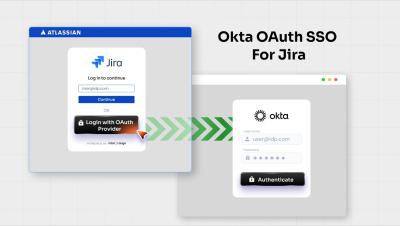
How to Configure Jira OAuth/OIDC SSO Integration with Okta | Step-by-Step Guide

Manually managing user authentication in Jira can lead to security gaps and administrative overhead. By integrating Okta with Jira using the miniOrange OAuth/OIDC SSO plugin, you can provide your team with a seamless, secure, and centralized login experience. In this video, we walk you through the entire end-to-end configuration: from setting up a Web Application in the Okta Admin Console to finalizing the OAuth settings within Jira. You’ll see exactly how to map Client IDs, secrets, and endpoints to get your SSO up and running in minutes.

Defeating the deepfake: stopping laptop farms and insider threats

Trust is the most expensive vulnerability in modern security architecture. In recent years, the security industry has pivoted toward a zero trust model for networks — assuming breach and verifying every request. Yet when it comes to the people behind those requests, we often default back to implicit trust. We trust that the person on the Zoom call is who they say they are. We trust that the documents uploaded to an HR portal are genuine. That trust is now being weaponized at an unprecedented scale.

NIS2 Documentation Requirements: Policies You Must Have

NIS2 documentation requirements form the essential foundation of regulatory compliance — defining the documented controls that underpin NIS2 audit readiness and demonstrable cybersecurity governance. Yet in 2026, the landscape is shifting: documentation alone is no longer enough.