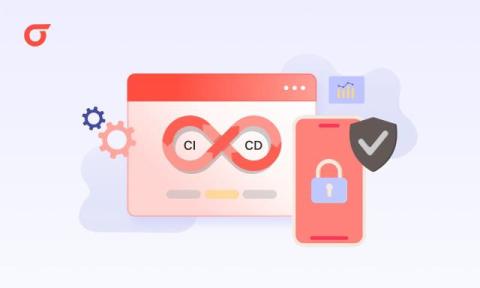
How to Implement Mobile AppSec in a CI/CD Pipeline

For many engineering teams, CI/CD security appears to be working. Static scans run automatically. Vulnerabilities are flagged. Security checks exist somewhere in the pipeline. Yet issues still surface after release. The reason is rarely the absence of tools. More often, it is the absence of structural enforcement across the build lifecycle. Security controls run inside the pipeline, but they do not always guarantee that the artifact being tested is the same artifact that ultimately reaches users.
Per-Agent Guardrails: How to Set Different Policies for Different AI Agents

You’ve deployed five AI agents into your production Kubernetes cluster: a customer support chatbot, a fraud detection agent, a data pipeline processor, a code generation assistant, and an internal summarization bot. Your security team writes one set of guardrails and applies them uniformly. Within a week, you discover the code generation agent needs interpreter access the chatbot should never have.

2,622 Valid Certificates Exposed: A Google-GitGuardian Study Maps Private Key Leaks to Real-World Risk

GitGuardian partnered with Google to answer: what happens when private keys leak? Using Certificate Transparency, we mapped about 1M leaked keys to 140k certificates. Result: 2,622 were valid as of September 2025, exposing major organizations. Our disclosure campaign achieved 97% remediation.

The Future of the Cybersecurity Workforce in an AI-Driven Era

New research shows the cybersecurity workforce is undergoing a major shift as AI transforms security operations. While leaders remain deeply committed to the field, many are facing increasing burnout, evolving skill demands, and growing responsibility for governing AI-driven systems. The future cybersecurity leader will need to balance technical expertise with communication, business alignment, and AI oversight.

Runtime Observability for AI Agents: See What Your AI Actually Does

Last Tuesday, a platform security engineer at a mid-size fintech company ran a routine audit on their production Kubernetes clusters. The audit surfaced three LangChain-based agents, two vLLM inference servers, and a Model Context Protocol (MCP) tool runtime. None had been reported by the development teams. None appeared in any security inventory. All had been running for weeks. One of the agents had been making outbound API calls to a third-party data enrichment service every four minutes.

Let's Talk Security: Operationalizing Zero Trust

In this conversation, Forescout CEO Barry Mainz is joined by Dr. Chase Cunningham, also known as Dr. Zero Trust. Together, they will explore why Zero Trust feels harder than promised in real-world environments and what changes when you make Zero Trust universal (UZTNA): every connection, every asset, every environment.

Cato Networks Named a SASE Industry Leader and Outperformer for the THIRD Consecutive Year

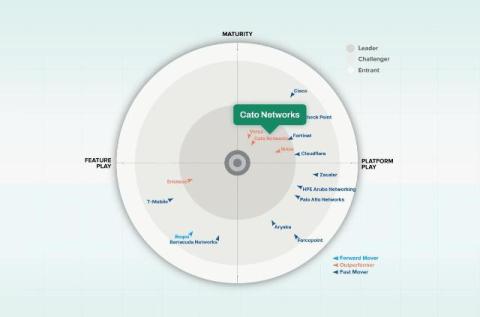
Cato Networks has been named a Leader and Outperformer in the 2026 GigaOm Radar for Secure Access Service Edge (SASE) — marking the third consecutive year we’ve earned this distinction. And, once again, Cato is positioned closest to the center of the Radar, of all participants. In this year’s GigaOm Radar for SASE, Cato is positioned in the Maturity/Platform Play quadrant, reflecting the depth, completeness, and enterprise readiness of the Cato SASE Platform.

OpenShift Virtualization Engine: The Complete Handbook

Running virtual machines and containers side by side typically means managing two separate infrastructure stacks with different tools and workflows. OpenShift Virtualization Engine solves this by letting VMs run as native Kubernetes resources within Red Hat OpenShift. You get one platform, one interface, and consistent policies across your entire environment.

What to Look for in an AI Workload Security Tool: The Complete Buyer's Guide

You’re evaluating AI workload security tools and every demo looks the same. Vendor A shows you an AI-SPM dashboard. Vendor B shows you a nearly identical AI-SPM dashboard with slightly different branding. Vendor C shows you posture findings with an “AI workload” tag that wasn’t there last quarter.

Understanding access control systems and security management

Access control systems and security management are crucial components in safeguarding assets, information, and people within an organization. These systems help in regulating who can view or use resources in a computing environment. Effective security management ensures that the right individuals have access to the right resources at the right times for the right reasons. This blog post explores the essential aspects of access control systems and the importance of robust security management practices.