Email Security: What It Is, How It Works, and Best Protection Methods

Email-based threats are evolving faster than traditional solutions can keep up. According to Verizon’s 2025 Data Breach Investigations Report, the use of synthetically generated text in malicious emails has doubled over the past two years. That makes it far more difficult to spot social engineering attacks like phishing, which trick users with deceptive messages.

HIPAA + GDPR for Global Healthcare: Overlapping Requirements and Conflicts

If your organization serves patients in both the United States and the European Union, two regulators, HIPAA and GDPR, are already watching your website. Specifically, what happens in the seconds between a visitor landing on your page and your analytics stack doing its job. In March 2024, OCR mentioned that even unauthenticated website interactions, like a user browsing your oncology content or typing into a symptom checker, can constitute PHI if the visit is for health-related purposes.

How to Prevent and Defend Against Spoofing Attacks

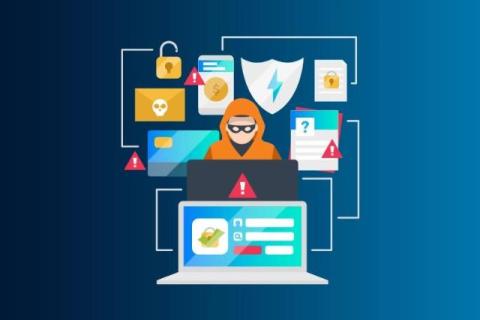
In this age of computers and the internet, cyber risks like spoofing attacks are becoming more sophisticated and more harmful. Spoofing is when cybercriminals pretend to be legitimate entities, like companies, people, or websites, to trick people into giving up private information or doing malicious activities. Spoofing has significant effects, ranging from financial losses to reputational damage. According to Proofpoint’s research, over 90% of phishing attacks occur through email spoofing alone.

Navigating the U.S. Public Sector's Unrelenting Cyber Crisis

The U.S. public sector faces unique challenges as it is tasked with safeguarding the most sensitive data of citizens, all while maintaining the critical infrastructure that keeps society functioning. Unfortunately, government and educational institutions are no longer just peripheral targets, they are on the frontline of cyberattacks.

CCPA for Mobile Apps: SDK Tracking Risks and Compliance Gaps

In 2024, the California Attorney General established a new standard for mobile app compliance after securing a $500k settlement with Tilting Point Media, owing to misconfigured SDKs in one of their games that led to inadvertent CCPA and COPPA violations. The issue? The misconfigured SDKs silently caused sales and the share of children’s data without parental consent. And despite the company’s argument that the misconfiguration was unintentional, the AG’s response set a precedent.

How Does Endpoint Deception Detect Attacks Before Damage Happens?

Let’s be honest. EDR has improved endpoint security dramatically over the last few years. It catches malware, blocks suspicious processes, and alerts on abnormal behavior. But no tool is perfect. Every detection model has blind spots. Attackers know this. They test environments. They move carefully. They use living-off-the-land techniques, stolen credentials, and legitimate tools. Sometimes, they move in ways that don’t immediately trigger alarms.

Agentic AI Security: Automated False Positive Suppression

LimaCharlie's Agentic SecOps Workspace (ASW) is a platform where AI doesn't just advise, it acts. By connecting to your security infrastructure via API, the ASW executes operations end-to-end at a fraction of the cost of traditional AI SOC platforms. The result is genuine AI security automation that operates independently and serves as a force multiplier, giving every analyst on your team access to senior-level expertise. Alert fatigue is one of the most persistent challenges in security operations.

Detecting Living-off-the-Land Attacks in OT Networks

The most dangerous attacker inside your OT network right now may not have brought a single piece of malware with them. They’re using your own tools. Your own administrative credentials. Your own scheduled tasks and remote management utilities to execute malicious commands, move laterally, and quietly pre-position for a future disruption. This is living-off-the-land (LOTL), the dominant attack technique in critical infrastructure targeting today.