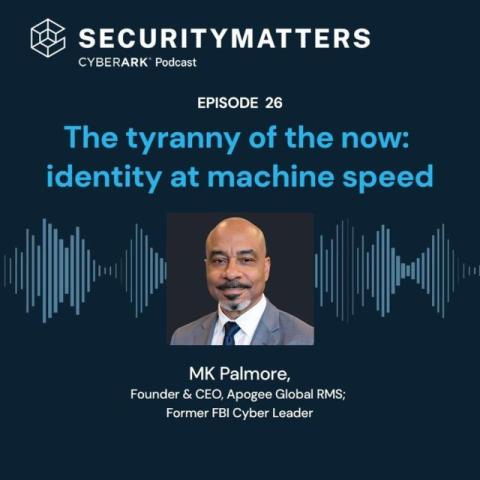
EP 26 - The tyranny of the now: identity at machine speed

Security teams are under more pressure than ever, reacting at human speed while systems, identities, and AI agents operate at machine speed. In this episode of Security Matters, host David Puner sits down with cybersecurity leader and former FBI executive MK Palmore to explore why defenders struggle to keep pace and what it takes to regain control.

CVE-2026-29000: Authentication Bypass in pac4j-jwt Java Library

On March 03, 2026, pac4j released fixes for a maximum severity vulnerability in pac4j-jwt, tracked as CVE-2026-29000. The flaw arises from improper verification of cryptographic signatures in the JwtAuthenticator component when processing encrypted JWTs (JWE). A remote, unauthenticated threat actor who knows the server’s RSA public key can bypass authentication and impersonate arbitrary users (including administrators) by submitting a crafted JWE whose inner token is an unsigned PlainJWT.

New A0Backdoor Linked to Teams Impersonation and Quick Assist Social Engineering

BlueVoyant Security Operations Center (SOC) and Threat Fusion Cell (TFC) continue to track an activity cluster that uses email bombing and IT-support impersonation over Microsoft Teams to obtain Quick Assist access, then pivot to a deeper attack. This research shows that once on the victim’s host, the actors sideload a malicious DLL to deliver a new backdoor BlueVoyant has dubbed the A0Backdoor.

Bridging IT and OT identity decisions on the factory floor

In today’s smart factories, production doesn’t go quiet at shift change. Behind the scenes, modern manufacturing systems never cease. They continuously exchange data, adjust software and processes in real time, and allow vendors to connect remotely to monitor performance or deliver updates. As these interactions multiply, the number of identity-driven points grows just as quickly.

AI Impact Summit 2026 Highlights | FinTech, AI & Data Security Insights #ai

AI Impact Summit 2026 Highlights | AI, FinTech & Data Security Insights from Delhi This video covers our 5-day experience at AI Impact Summit 2026 in New Delhi, one of India's leading technology events focused on Artificial Intelligence, FinTech, Data Security, and Compliance. During the summit, we connected with industry leaders, CISOs, FinTech professionals, and AI innovators, discussing the latest developments in data protection, AI governance, cybersecurity, and enterprise AI adoption.

Data Loss Prevention (DLP): What It Is, Types, and Solutions

Most data breaches don’t happen because systems fail. They happen because people make routine errors. Attackers know this, which is why social engineering has become the dominant attack vector, exploiting everyday actions like emailing files or responding to messages. Today, 70–90% of successful cyber attacks involve social engineering, resulting in data exposure that technical safeguards can’t intercept.

Entropy vs. Polymorphic Tokenization: Which One Actually Protects Your AI Pipeline?

If you’re building AI applications that touch sensitive data, tokenization isn’t optional. It’s the layer that decides whether your pipeline leaks PHI, PII, or financial data to your LLM, or keeps it protected. But here’s where most teams stop thinking: not all tokenization is the same. Two approaches you’ll encounter most often are entropy-based tokenization and polymorphic tokenization. They sound similar. They serve completely different purposes.

How KeeperPAM Integrates With CNAPP

Description: Cloud-Native Application Protection Platforms (CNAPPs) provide visibility into cloud risk, but without a Privileged Access Management (PAM) solution, organizations cannot enforce secure access with CNAPPs alone. In this video, learn how KeeperPAM integrates with CNAPPs to enforce zero-trust, least-privilege access across cloud-native environments.

5 Ways Managed Security Services Protect Small and Mid-Sized Businesses

Cybersecurity has become a major concern for organizations of every size. However, small and mid-sized businesses often face a unique challenge: they must protect their systems and data without the large internal security teams that many enterprises rely on. At the same time, cybercriminals increasingly target smaller organizations because they may have fewer resources dedicated to cybersecurity.

Stablecoin Development Companies in 2026

Listen, I've been in this space long enough to watch stablecoins go from "that weird pegged token thing" to "the actual backbone of crypto payments." 2026 is wild - regulators finally figured out what stablecoins are (only took them a decade), banks are building with them, and suddenly everyone wants one.