How to Create an Incident Response Procedure
In the event of a data breach or security incident, having a well-defined incident response procedure can help contain the damage and minimize the risk of future incidents.

In the event of a data breach or security incident, having a well-defined incident response procedure can help contain the damage and minimize the risk of future incidents.
Comodo is a cybersecurity solutions provider helping businesses and individuals stay protected from all sorts of cyber threats. It provides verdict processing, digital certificates, endpoint protection, helps organizations implement and monitor their network security policies, and much more. Among its digital certificates, Comodo also provides code signing certificates to developers and development companies.
In today’s digital world, data breaches are becoming more and more common. In fact, recent studies found that a large majority of breaches are caused by stolen secrets & credentials, such as API keys. API keys are used to access data and resources from another application or service. They are typically used to connect two applications so that they can share data. For example, if you use a weather app on your phone, that app likely uses an API key to access the Weather Channel’s data.
The cyber insurance market has experienced dramatic changes over the past couple of years – including large payouts from ransomware attacks and the shift to hybrid/remote work – which has had a substantial impact on premiums. According to Egnyte’s recent Cybersecurity Trends for Mid-Sized Organizations Report, 47% of organizations have experienced premium increases of 76% or more in the past year.
The increased use of open-source software components in application development exposes companies to security vulnerabilities and liability related to software licensing. To mitigate these risks, software development organizations are turning to Software Composition Analysis (SCA) tools, which identify security and license compliance issues in code.
The supply chain is a complex environment that goes deep inside a business and involves the majority of its infrastructure, operations, personnel, and outer relations: vendors, partners, and customers. To protect that matrix is extremely difficult, as there are numerous sensitive nodes, lines, and processes that a security team has to take care of: software and hardware resources, cloud, hybrid and local environments, platforms, and web apps.
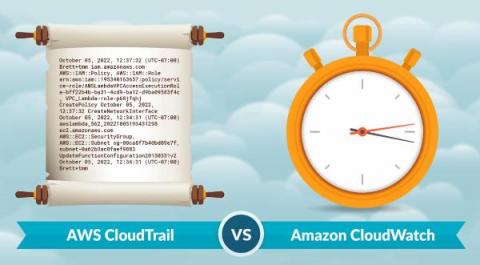
What is different about cloud log management versus on-premises? The answer may seem simple, but several elements such as CloudTrail vs. CloudWatch come into play. In this article, we will cover some of the most important differences, and then dig deeper into a specific example of AWS CloudTrail vs. CloudWatch.