People are one of the most common factors contributing to successful data breaches. Let’s dive in deeper into the latest Verizon Data-Breach Investigations Report (DBIR) to find out how and why users are a contributor to the problem.
As a CIO at a mid-sized company, I faced a new challenge when vendors asked for more specifics about our information security and the protocols we have in place to safeguard our sensitive data. Naturally, those questions were directed toward the IT team (and were phrased in ISO 27001 terminology), which was initially challenging because we had limited knowledge of that particular standard.
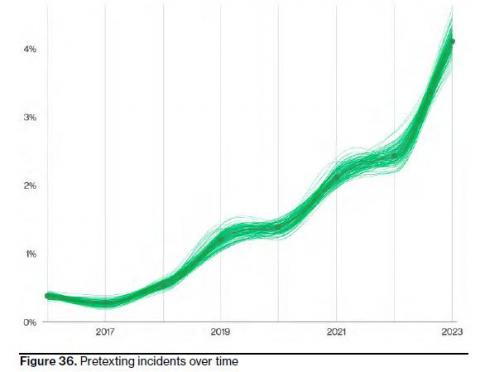
The New Verizon DBIR is a treasure trove of data. As we covered here, and here, people are one of the most common factors contributing to successful data breaches. Let’s drill down a bit more in the Social Engineering section. They explained: "Now, who has received an email or a direct message on social media from a friend or family member who desperately needs money? Probably fewer of you. This is social engineering (pretexting specifically) and it takes more skill.
We occasionally learn of articles and papers that claim that security awareness training and/or simulated phishing campaigns are not effective. We don’t want to disparage what these individuals have found in their own experience, and we encourage everyone to find out how various social engineering mitigations work for themselves and their environments.
The constant evolution of technology has led to increasingly sophisticated and frequent cybersecurity threats. As a result, the need for skilled professionals who can effectively handle these threats has never been more pressing. Sadly, there is a shortage of such experts to meet the growing demand. The (ISC)² Cybersecurity Workforce Study revealed that the global cybersecurity workforce gap is 3.4 million people.