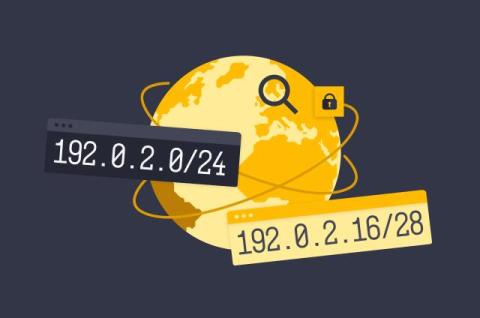
Introducing IP Range Scanning: continuous Surface Monitoring for your entire network

Most organizations share a common, uncomfortable secret: they can’t answer basic questions about what is actually exposed on their IP ranges. As companies grow, whether through decades of history, global data centers, or regional allocations, they lose visibility of their IP footprint. Traditional manual reconnaissance is a point-in-time sync, often leaving security teams blind to what’s actually running on their infrastructure.

Spring 2026 GenAI Code Security Update: Despite Claims, AI Models Are Still Failing Security

The last six months have been nothing short of revolutionary for AI-powered coding. OpenAI‘s “Code Red” release brought us GPT-5.1 and 5.2. Google unveiled Gemini 3 with its touted “unprecedented reasoning capabilities.” Anthropic rolled out Claude 4.5 and 4.6, powering the increasingly ubiquitous Claude Code features. Enterprise adoption of tools like OpenClaw has exploded, with developers praising unprecedented productivity gains.

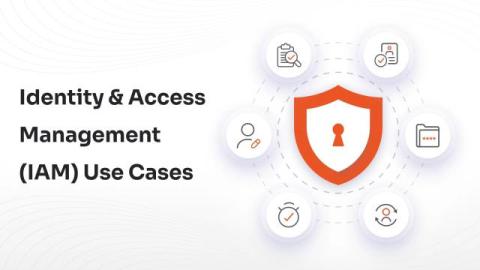
Identity and Access Management (IAM) Use Cases

Before the COVID-19 pandemic, when hybrid and remote work became common, Identity and Access Management (IAM) worked in the background. It was important, but mostly invisible outside IT and security teams. That’s not the case anymore. Today, identity shows up in almost every digital interaction. Employees move between devices. Customers expect sign-ins to just work. Compliance teams want clear answers about access trails. Industry trends reflect this shift.

SMB Cybersecurity Spending Rises: Zero Trust & Secure Access Now Essential

Cybersecurity is no longer just for large enterprises. Small and medium-sized businesses (SMBs) are boosting security investments as cyber risks increase and digital operations expand. According to Omdia, SMBs account for more than 99% of organizations worldwide. In 2025, these businesses increased their cybersecurity spending by 11%, reaching $64.3 billion. This surge reflects an important shift. SMBs are no longer treating cybersecurity as a reactive IT expense.

The Library That Holds All Your AI Keys Was Just Backdoored: The LiteLLM Supply Chain Compromise

We just published a deep breakdown of the Trivy supply chain attacks yesterday. Twenty-four hours later, we’re writing about the next one. Same threat actor. Different target. Worse implications. This time it’s LiteLLM, the Python library that acts as a universal API gateway for over 100 LLM providers. If you’re building anything with AI agents, MCP servers, or LLM orchestration, there’s a good chance LiteLLM is somewhere in your dependency tree.

Agentic Context Security Platform Protecto is Now Available on Google Cloud Marketplace

Enterprise Agentic AI adoption faces a critical barrier: sensitive data exposure. AI agents perform tasks only as well as the context provided to them. However, context is precisely where enterprise data enters the workflow, introducing significant risk. Organizations need to deploy AI applications while maintaining strict data security, regulatory compliance, and privacy. This challenge stalls production deployments across enterprises, especially in healthcare and financial services.

News: AI-native Security Assurance leads the GRC Transformation

Enterprise CISOs are being asked to do more than ever. Their role is now two-fold: protector of the business and enabler of its growth. They need to reduce risk across a vast and changing digital environment, protect the business, satisfy customers, and meet compliance requirements. What’s more, they want to showcase the positive impacts of their security program to executive leadership and the board and support the growth of their organization.

Cybersecurity for Education - Sophos Protected Classroom

Cybercriminals are targeting schools more than ever, drawn by sensitive student and staff data and the chance to disrupt learning. For educators already managing tight budgets and growing digital demands, a single breach can mean days of downtime and lasting reputational damage. Criminals are increasingly attracted by the valuable and sensitive information education establishments hold, and the opportunity to extort payments using ransomware or the threat of breach exposure.