Types of Web App Attacks Explained by Experts

Web applications process billions of transactions every day, handling everything from user credentials to financial records. This constant exchange of data makes them prime targets for attackers who are looking to gain access for data theft or service disruption. Web application security vulnerabilities are highly sophisticated attack vectors that can exploit authentication flows, business logic, and API integrations.

From IDE to CLI: Securing Agentic Coding Assistants

Today we’re excited to announce that Zenity now protects the most powerful, enterprise-critical coding assistants - Cursor, Claude Code, and GitHub Copilot - from build-time to runtime. As AI becomes a first-class developer tool, Zenity gives security teams the visibility and control they need to safely embrace coding assistants everywhere they’re used, in IDEs, CLIs or in the cloud.

Sophos Firewall: Back up and restore firewalls

A step-by-step tutorial showing you how to back up and restore your Sophos Firewall. You'll learn about the different backup modes, secure storage master key (SSMK), and best practices for firewall backups. Next, you'll learn the steps to create a firewall backup, back up your configuration to Sophos Central, and restore backups to the same or different firewall model. Ask questions and get expert answers in the Sophos Community.

Common Web Application Vulnerabilities: Expert's Opinion [2026]

Hackers love web applications. Why? Because 9 out of 10 vulnerabilities exist at the application layer, and exploiting them lets attackers bypass firewalls and perimeter defenses completely. In 2025, a total of 48,448 Common Vulnerabilities and Exposures (CVEs) were published, up 17% from the previous year, where such exploited vulnerabilities in web applications cost organizations an average of $4.44 million in damages, excluding the lost reputation.

Payment Processor Security Requirements: Stripe, Adyen, and PayPal (Braintree) Compared

Chances are, if you are reading this article, you are comparing Stripe, Adyen, and PayPal (Braintree) on fees, payout timing, and how quickly you can ship the integration. And that would be reasonable. But the security outcome is shaped earlier than most teams think. A payment processor protects card data once it enters its fields and systems. The transaction begins on your checkout page, inside a browser that is also running analytics, tag managers, A/B tests, support widgets, and third-party scripts.

Emerging Threat: CVE-2026-24061 - Telnet Authentication Bypass in GNU Inetutils

CVE-2026-24061 is an authentication bypass vulnerability affecting the Telnet service provided by GNU Inetutils. The issue allows an unauthenticated remote attacker to bypass expected authentication checks and gain access to the Telnet service under certain conditions.

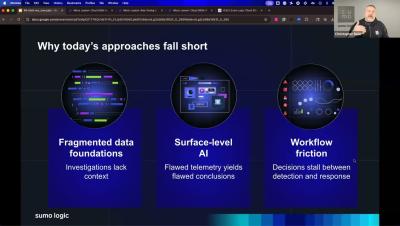
Sumo Logic's 2026 Security Operations Insights report: AI, siloed tools, and team alignment

Security threats have always been expanding and evolving, but recent data shows that modern applications are more complex for security and operations than ever before. And AI is only a piece of that puzzle. To stay on top of the changing market and hear directly from security leaders on what’s really top of mind, Sumo Logic surveyed over 500 security leaders with the help of UserEvidence. We asked about data pipelines, tool sprawl, confidence in SIEM, and, of course, AI.

Cyber Risk in 2026: Top Threats, AI Risks & What Security Leaders Must Do Next

Cyber risk is evolving fast—and 2026 will demand more from security leaders than ever before. In this forward-looking webinar, Bitsight Co-Founder Stephen Boyer and SVP Vanessa Jankowski break down the biggest cyber threats shaping the year ahead, from AI-driven attacks and expanding attack surfaces to third-party and cloud risk.

How to Detect Unauthorized Script Changes in Real-Time for PCI 11.6.1

If you stand behind almost any modern checkout today and inspect the network tab, you will rarely see a tidy, controlled set of assets. Instead, you will see 15 to 30 different scripts, ranging from payment orchestration and fraud tools to analytics and session replay, all the way to tag managers, experimentation, consent logic, and accessibility widgets, with many loading from domains your security team has never directly vetted.