How to Manage Identity Sprawl in the Age of AI Agents and NHIs

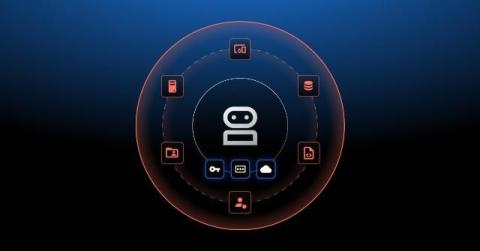
Non-human identities (NHIs) and AI Agents including service accounts, CI/CD credentials and cloud workload identities, now eclipse human identities in enterprise identity systems by 50:1 to 100:1. Modern identity security platforms must assign identities to these assets and furthermore, apply roles, access control policies, visibility and governance in order to secure the modern enterprise.

How Can Organizations Perform Hybrid Infrastructure Risk Assessment Effectively?

Most organizations didn’t design their infrastructure to become hybrid. It happened gradually. A few workloads moved to the cloud first. Development teams adopted new services. Meanwhile, some systems stayed exactly where they were — inside internal data centers — because moving them wasn’t practical. Over time the environment expanded. Now many organizations run applications across cloud platforms, private infrastructure, and on-premise systems at the same time.

Secure Jira Cloud REST API Integrations: Beyond Atlassian Native Authentication

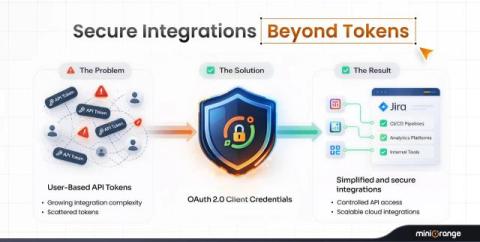
Jira Cloud APIs are widely used for automation and integrations across CI/CD, DevOps, reporting, and internal tools. Atlassian provides native REST API authentication using API tokens and OAuth. This works well for simple scripts and internal automation. However, modern organizations often require stronger controls when APIs are used by multiple services, integrations, and automated systems. As integrations grow, teams often need a more controlled authentication model than user-based tokens alone.

New CrowdStrike Innovations Secure AI Agents and Govern Shadow AI Across Endpoints, SaaS, and Cloud

As organizations race to adopt new AI tools, deploy AI agents, and build AI-powered software, they create new attack surfaces that traditional security controls were never designed to protect. A key example is the prompt and agentic interaction layer, which faces novel threats like indirect prompt injection and agentic tool chain attacks.

Segmentation Built for the Hybrid Reality

Traditional, IP‑based segmentation can’t keep up with today’s hybrid networks. In this video, learn why visibility, device identity, and risk context are essential to segmenting modern IT, OT, and IoT environments — and how Forescout is redefining segmentation for the way enterprises actually operate.

From Endpoint Visibility to Business ROI: Why Workforce Analytics Is Becoming A Boardroom Priority

In most organizations, the largest line item on the balance sheet isn’t technology, it’s people. Labor accounts for 70% of total operating expenses in most SaaS businesses, yet executives often lack a clear view of how that investment translates into productivity, risk exposure, software utilization, and operational efficiency. At the same time, organizations are facing a new wave of hidden costs: These blind spots quietly drain millions from operating budgets.

Homomorphic Encryption in LLM Pipelines: Why It Fails in 2026

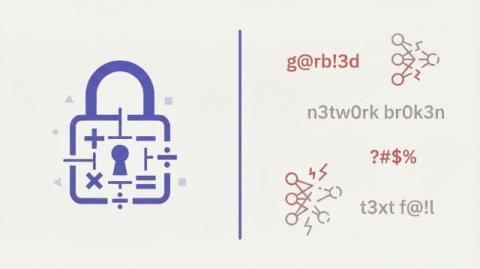
There’s a claim gaining traction in the market: homomorphic encryption can preserve data privacy in AI workflows. Encrypt your data, run it through a language model, and never expose a single token. Sounds bulletproof. It isn’t. Homomorphic encryption (HE) was built for math, not language. Applying it to LLM pipelines is like encrypting a book and asking someone to summarize it without reading a word. The problem isn’t efficiency.

Falcon Next-Gen SIEM Supports Third-Party EDR Tools, Starting with Microsoft Defender

CrowdStrike is expanding CrowdStrike Falcon Next-Gen SIEM to support third-party endpoint detection and response (EDR) solutions — beginning with Microsoft Defender — with no Falcon sensor required. This evolution will enable organizations to modernize their SOC without replacing existing endpoint agents. Adversaries are moving faster than ever, exploiting cross-domain gaps across endpoint, identity, network, and cloud.

The 'Urgency Trap': Why Time Pressure is Your Biggest Email Red Flag

The old rules for spotting a phishing email are changing. Remember looking for bad grammar and clumsy spelling? Thanks to AI, hackers' emails are increasingly polished and hard to spot. But a new poll from KnowBe4 reveals the modern worker's most reliable alarm bell for a cyberattack isn't a typo; it's a sense of manufactured urgency.

OpenClaw Needs Real Security Controls; We Built Them Open Source

AI agent adoption and development are evolving quickly. The tooling used to build agents is improving fast, but the security controls around those agents are often rigid, opaque, or difficult to adapt to real environments. As more teams experiment with OpenClaw, one challenge becomes clear: developers need ways to inspect what agents are doing, evaluate risky behavior, and intervene when necessary.