
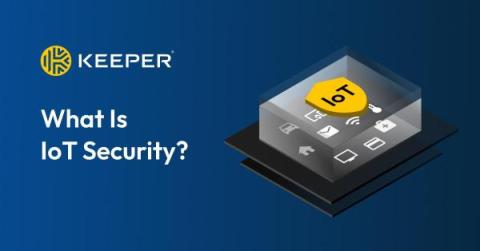
What Is IoT Security?
Internet of Things (IoT) security protects IoT devices and the networks to which they connect from cyberattacks. IoT devices can include anything that connects to your internet including doorbell cameras, baby monitors, smart bulbs and thermostats. This presents a cybersecurity risk because anything that can connect to your internet is at risk of being hacked.

Why You Shouldn't Share Your Netflix Password, Even With Your Parents
Until recently, Netflix wasn’t too concerned about its members sharing their accounts with friends and family. In a 2016 statement, Reed Hastings, Netflix CEO said “password sharing is something you have to learn to live with, because there’s so much legitimate password sharing, like you share with your spouse, with your kids… so there’s no bright line, and we’re doing fine as it is.”

Data Governance in 2023:Definition & Best Practices
The world is becoming more reliant on data through data analytics and AI, where a lack of data quality can cost 74% more time spent on non-value added tasks by employees. This makes proper data governance more crucial than ever. As organizations become data-driven and interact with more data than ever, understanding the ins and outs of data governance is essential for ensuring data quality, security, and regulatory compliance.
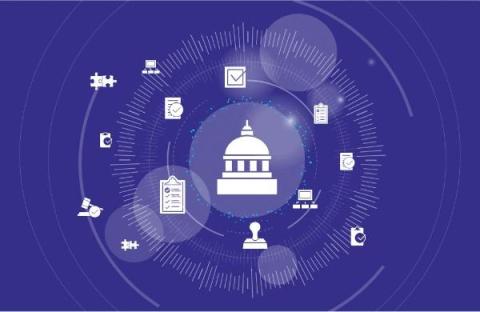
Why Legal Regulation Shifts Responsibility for Software Supply Chain Security to Vendors
In the face of increasingly impactful malicious attacks, governments of leading economies have turned their attention to the software supply chain security. Regulations like the EU’s Digital Operational Resilience Act (DORA) for financial institutions and the Cyber Resilience Act (CRA) for software and hardware providers Australia’s 2023-2030 cybersecurity strategy, and the U.S.

Deep learning in security: text-based phishing email detection with BERT model
Phishing emails are fraudulent or malicious emails that are designed to deceive recipients and trick them into revealing sensitive information, such as login credentials, financial details, or personal data. Phishing email contents usually employ various social engineering techniques that are likely to manipulate recipients, leading to significant damage to personal or corporate information security.

What Zero Trust Vendors Need To Tell You
What size Zero Trust would you like? Zero Trust Architecture (ZTA), and cybersecurity in general, would be easier if you could walk into a Zero Trust shop instead of navigating a human and technological minefield featuring confused executives, reluctant employees, and a buzzword-heavy Zero Trust vendor landscape. The fact that “humans don’t work in a Zero Trust manner” will not change anytime soon, but technology is something in your control.

7 Compelling Reasons Why Analysts Recommend SASE
Gartner introduced SASE as a new market category in 2019, defining it as the convergence of network and security into a seamless, unified, cloud-native solution. This includes SD-WAN, FWaaS, CASB, SWG, ZTNA, and more. A few years have gone by since Gartner’s recognition of SASE. Now that the market has had time to learn and experience SASE, it’s time to understand what leading industry analyst think of SASE?