Using Veracode Fix to Remediate an SQL Injection Flaw

In this first in a series of articles looking at how to remediate common flaws using Veracode Fix – Veracode’s AI security remediation assistant, we will look at finding and fixing one of the most common and persistent flaw types – an SQL injection attack. An SQL injection attack is a malicious exploit where an attacker injects unauthorized SQL code into input fields of a web application, aiming to manipulate the application's database.


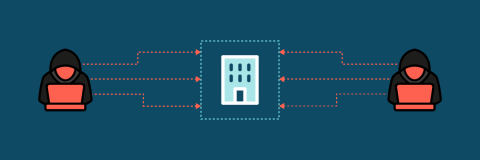
The First Breach of 2024: Transformative Healthcare; Data Stolen from +900k Victims

Our first breach report of 2024 concerns Boston’s retired Fallon Ambulance Service (FAS). When operating, FAS was a medical transcription company serving emergency services and other affiliated companies. Transformative Healthcare (TH) oversaw FAS as a support component of their telephone services. TH absorbed FAS in December 2022 but retained patient data in compliance with their legal obligations.

Boston-Based Community College, Bunker Hill, Updates on 2023 Ransomware Event

Bunker Hill Community College (BHCC) serves a population of about 13,000 across two campuses and dispersed locations. BHCC offers over 100 degrees, including arts, sciences, business, health, law, and STEM opportunities. In May 2023, BHCC experienced a ransomware event—officials responded by taking their systems offline—but the threat was successful nonetheless. The assailants stole an estimated 195,588 records in their attack.

Domain (in)security: the state of DMARC

As people have grown comfortable with e-commerce and email correspondence, the techniques of scammers have become increasingly sophisticated and hard to detect. Many of us have heard of phishing attacks, in which bad actors coerce people into handing over sensitive information. These are usually carried out by impersonating a trusted third party – and overwhelmingly through email (Deloitte, 2020).

How to monitor your organization's presence on the dark web

Googling your organization’s name will bring up all sorts of information. However, there’s more to the internet than the surface web that’s accessed through regular search engines: the deep web and the dark web. To stay ahead of potential threats and maximize incident response performance, security teams need a complete view of their organization’s presence across all areas of the internet.

Threat Intelligence for Multi-Cloud Environments & ICSs

Almost every organization is in the cloud. In fact, most organizations above a certain size are in more than one. As multi-cloud becomes more common, however, ensuring security among multiple providers becomes more challenging. Being aware of these logistical challenges goes a long way toward planning around them. One of the best ways to do this is to deploy a comprehensive multi-cloud threat hunting strategy.

The Road to Digital Resilience Right-sizing Hybrid Cloud Application Deployments

Not that long ago, organizations were squarely focused on moving their applications and infrastructure to the cloud to benefit from its scalability, flexibility, and cost savings. Today, however, priorities are shifting, leading many to focus on right-sizing hybrid cloud deployments and establishing digital resilience. You will learn how digital resilience for hybrid cloud application delivery.

The Nature of the Beast Ransomware

Monster, a novel Ransomware-as-a-Service (RaaS) built on Delphi, surfaced in March 2022 and caught the attention of the BlackBerry Incident Response (IR) team during an incident investigation. After its initial appearance, Monster’s capabilities and its ransomware partnership program were promoted on the Russian Anonymous Marketplace (RAMP) in June. The mastermind behind Monster ransomware later introduced an enhanced version named Beast Ransomware, incorporating advanced features.

Why should developers care about container security?

Container scanning tools, industry publications, and application security experts are constantly telling us about best practices for how to build our images and run our containers. Often these non-functional requirements seem abstract and are not described well enough for those of us that don’t have an appsec background to fully understand why they are important.