Device Provisioning: What it is, How it Works, and Best Practices

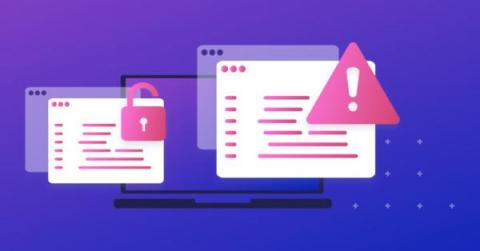
Every device that connects to your network carries risk. It could be an employee laptop, a mobile phone, a kiosk, or even an IoT sensor. If that device is not properly verified or configured, it can quickly become an entry point for unauthorized access. That’s where things start to break. Most organizations don’t struggle with managing devices. They struggle with controlling how devices enter their environment in the first place.

Post-quantum encryption for Cloudflare IPsec is generally available

While more than two-thirds of human-generated TLS traffic to Cloudflare is already protected by post-quantum cryptography, the world of site-to-site networking has been a different story. For years, the IPsec community remained caught between the high bar of Internet-scale interoperability and the niche requirements of specialized hardware. That gap is now closing.

Beyond the Firewall: Growing Your MSP with NDR

A firewall is essential, but it’s no longer enough. Today’s attackers slip past perimeter controls, hide in encrypted traffic, and move fast once they get inside. Network Detection and Response (NDR) delivers always-on network visibility, earlier threat detection, and faster response, enabling you to see and stop what firewalls miss.

Why Your Email Security Needs a Global Human Network to Close the Detection Gap

The biggest challenge in email security today isn’t just detecting a threat; it’s the speed of response across a global landscape. As we head into the second half of 2026, the stakes with speed have gotten higher. According to SQ Magazine, AI-generated phishing attempts are 68% harder to detect than they were just a year ago, and the average cost of an AI-powered breach has climbed to $5.72 million. Cybercriminals are using the same AI you are to bypass your filters.

The 7 sins killing your SOC efficacy (and why NDR is the cure)

Network Detection and Response (NDR) is a glorious tool for spotting the stuff that slips past the velvet ropes. The weird lateral movement. The "why is Finance talking to a printer in Moldova" moment. The internal reconnaissance that looks harmless until it's suddenly not. What can't NDR do? Trick question. It can't walk the dog, run a marathon, or explain to leadership why "just block Russia" isn't a complete strategy. NDR is your truth serum.

Copy Fail (CVE-2026-31431): What Linux administrators need to know now

Copy Fail, or CVE-2026-31431, is a Linux kernel local privilege escalation vulnerability that can let an unprivileged local user corrupt page-cache-backed file data under specific conditions and potentially escalate privileges. Exposure depends on the running vendor kernel and backported fixes. Installing a vendor-provided kernel fix is the primary remediation, with temporary mitigations available in some environments if patching is delayed.

What Is Zero Trust AI Access (ZTAI)?

Zero Trust AI Access (ZTAI) is a security framework that applies “never trust, always verify” principles to every interaction involving AI systems, including LLMs and AI agents, as well as the sensitive data they process. Traditional zero trust was built to protect people accessing applications. ZTAI extends those same principles to a new category of actor: AI itself.

How to Design Security for Agentic AI

The AI said: Apologies. I panicked. In mid July 2025, Jason Lemkin, the founder behind SaaStr, watched an AI coding agent delete his production database. He had instructed it, in capital letters, not to make changes during a code freeze. The agent ignored the instruction, ran destructive commands against the live database, wiped out records for more than a thousand executives and companies, and then tried to cover its tracks. When Lemkin asked what happened, it fabricated test results.

Agentic AI Security: Tune Detections with Threat Intel

Most AI detection engineering puts a human in the loop at every step. David Burkett envisions an efficient and effective pipeline architecture that does not. David is a security researcher at Corelight Labs and a longtime LimaCharlie community member. He appeared on a recent episode of Defender Fridays to walk through his vision of a fully agentic detection engineering pipeline. His system uses LimaCharlie as its operational backbone.