Your Data Has Moved to the Cloud - Can Your Security Strategy Keep Up?

In today's world, data is the lifeblood of every organization. From intellectual property to employee and customer data to competitive intelligence and more — if your data is stolen, it's your reputation, money, and business on the line. But the way we store and interact with data has changed over the years. It's no longer located inside a perimeter, on networks and devices your organization has total control over.


Cybersecurity Dilemma: Balancing Government Involvement Without Sacrificing Security Budgets

Unravel the cybersecurity dilemma in our latest video, where we explore the complex relationship between government involvement and corporate cybersecurity programs. Many cybersecurity leaders may express reluctance when asked about government intervention, fearing the additional burdens of setting up new compliance wings and diverting resources from tangible security budgets.

Browser-Based Phishing Attacks Increase 198%, With Evasive Attacks Increasing 206%

A new report shows massive increases in browser attacks in the second half of 2023, with over 31,000 threats specifically designed to bypass security solution detection. I spend a lot of time on this blog talking about phishing, social engineering, smishing, deepfakes and more – all topics centered around attack techniques designed to interact and fool a user.

Tiered KYC in Indian Payment Banks: Boosting Financial Inclusion

In India’s dynamic digital finance landscape, Payment Banks play a crucial role in extending banking services to the underbanked and unbanked populations. These banks are at the forefront of a financial revolution, aiming to secure and authenticate transactions through the stringent Know Your Customer (KYC) mandates set by the Reserve Bank of India (RBI).

PRC State-Sponsored Threat Actors (Volt Typhoon) Target Critical Infrastructure Entities

On February 7, 2024, CISA issued an advisory detailing their discoveries concerning state-sponsored cyber actors linked to the People’s Republic of China (PRC). Notably, the PRC-affiliated threat actor, Volt Typhoon, is actively engaged in efforts to infiltrate IT networks, with the potential aim of launching cyber attacks on vital U.S. infrastructure in the event of a substantial crisis or conflict with the United States.

#100 - A tale of two breaches: examining the AnyDesk & Cloudflare incidents

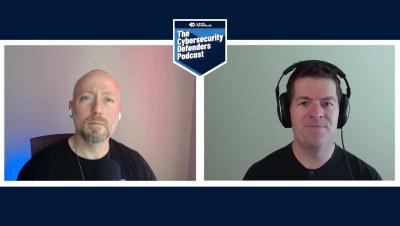
In this episode of The Cybersecurity Defenders Podcast, we take a close look at the AnyDesk and Cloudflare breaches that were both disclosed on February 2, 2024. AnyDesk, a prominent remote desktop software provider, disclosed a cyberattack late on February 2nd, causing the company to enforce strict security measures for nearly a week. Adversaries breached AnyDesk's systems, compromising vital assets such as source code and private code signing keys, and gaining unauthorized access to production systems.

Mastering Access Management: Your Essential Guide to Effective IAM Solutions

As cybersecurity threats evolve, how can your organisation stay shielded while ensuring staff efficiency? Access management is the cornerstone of a secure digital environment, balancing critical data protection with essential user accessibility. In this article, we will guide you through strategic insights and practical steps to bolster your enterprise’s defences with robust Identity Access Management (IAM) solutions.

Fortinet Vulnerability: CVE-2024-21762

On Thursday, February 8th, the Fortinet Product Security Incident Response Team released an advisory (FG-IR-24-015) notifying of an out-of-bound write vulnerability in their SSL VPN tracked as CVE-2024-21762. The vulnerability “may allow a remote unauthenticated attacker to execute arbitrary code or command via specially crafted HTTP requests”.

How To Create a New Branch In GitHub?

Managing different features and fixes without tangling the core code is crucial. This is where the understanding of branching in GitHub enters the chat. Think of a branch in GitHub as a parallel universe for your project, where you can experiment, develop, and refine new features or fixes, all without impacting the main codebase. It’s a fundamental practice that not only keeps your project organized but also creates a flexible and collaborative development environment.