Cybersecurity Challenges in European Telehealth

Telehealth or telemedicine is one of the most common ways of providing healthcare services in the EU, with nearly 77% of countries adopting some type of telehealth service. Countries like Norway, Sweden, Denmark, and Italy are considered some of the world’s leaders in providing telehealth services. Following the COVID-19 pandemic, telehealth became widely adopted across Europe, with many countries participating in cross-border collaboration.


Revolutionizing Security: How Brivo Leads with Cutting-Edge Tech

Dive into the world of advanced security technology with Brivo, the pioneer in cloud-based access control and smart spaces technology. For over two decades, Brivo has been at the forefront of innovation, partnering with top providers and internal security teams to equip customers with the latest advancements. 🌐✨

Guide to Group Policy Management in Active Directory

Group Policy is a feature of Microsoft Windows operating systems that helps administrators manage and secure users and computers in Active Directory environments. Group Policy settings are grouped into Group Policy objects (GPOs) and applied to computer and user objects within the scope of the GPO. For example, Group Policy objects can be used to manage: This guide explains the key elements of Group Policy management.

From Risk to Fix in a Single Click: How CultureAI Are Redefining Nudges in Cyber Security

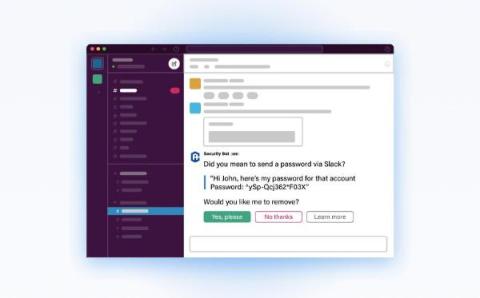
The term 'nudge' has become a buzzword in cyber security over recent years, often being mistakenly equated with 'notifications'. CultureAI aims to shift this perception by leveraging Nudge Theory principles to implement actionable Nudges.

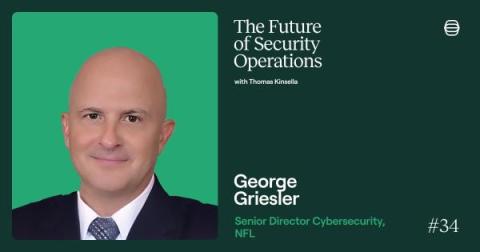
The NFL's George Griesler on securing the Super Bowl and reducing risk through collaboration

In this week’s episode of The Future of Security Operations podcast, I'm joined by George Griesler. George has been working in cybersecurity since 1997, when he assumed the role of Senior Network administrator at the United States Golf Association (USGA), eventually advancing to Director of Information Security.

An investigation into code injection vulnerabilities caused by generative AI

Generative AI is an exciting technology that is now easily available through cloud APIs provided by companies such as Google and OpenAI. While it’s a powerful tool, the use of generative AI within code opens up additional security considerations that developers must take into account to ensure that their applications remain secure. In this article, we look at the potential security implications of large language models (LLMs), a text-producing form of generative AI.

From Water to Wine: An Analysis of WINELOADER

In late February 2024, Mandiant identified APT29, a Russian state-sponsored threat group, deploying a new backdoor called WINELOADER to target German political parties. This campaign marks a significant shift in APT29's targeting, as they have traditionally focused on government and diplomatic entities. The expansion to political parties suggests an evolution in the group's intelligence gathering priorities, likely influenced by the current geopolitical climate.

What is Single Sign-On: The Benefits and Importance of Implementing SSO

Every day, more people get online - most do it for leisure, but organizations are increasingly moving into the digital environment. The increasing number of these new end-point users makes it clear that the cyber world must evolve. No longer can experts argue for unique platform passwords when password fatigue is prominent, nor can cybersecurity defenders protect all the various attack junctures across multiple platforms and tools.

New Vulnerability in R's Deserialization Discovered

Security researchers have identified a vulnerability, CVE-2024-27322, in the R programming language that permits arbitrary code execution by deserializing untrusted data. This flaw can be exploited when loading RDS (R Data Serialization) files or packages, which are commonly shared among developers and data scientists. An attacker can craft malicious RDS files or packages containing embedded arbitrary R code, triggering execution on the victim’s device upon interaction.

The secure email standard: safeguarding data in health and social care

To help secure sensitive data, emails that include health and care information sent to and from health and social care organisations are required to meet the Secure Email Standard (DCB1596). In this article, we discuss the standard, what it covers, and how to ensure your organisation fully meets its requirements.