State of DevSecOps

Shipping secure code rapidly and at scale is a challenge across the software industry, as evidenced by continued news of high-profile data breaches and critical vulnerabilities. To address this challenge, organizations are increasingly adopting DevSecOps, a practice in which application developers work closely alongside operations and security teams throughout the development life cycle.

Hunting 'unknown-unknowns' in your attack surface

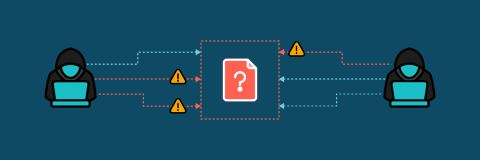
Ever lost sleep over possible hidden attack routes lurking in your organization’s attack surface? You’re not alone. The concept of ‘unknown-unknowns’ is a recurring nightmare for many IT professionals – but there are ways to mitigate the risks. We’ll explore the problem of unknown-unknowns and provide some practical strategies to help your organization uncover these hidden threats.

Ad Hoc Distributed Queries - SQL Server

An ad-hoc query is an unscheduled data inquiry, typically created in response to questions that cannot be addressed using predetermined or predefined datasets. Ad hoc distributed queries utilize the OPENROWSET(Transact-SQL) and OPENDATASOURCE(Transact-SQL) functions for establishing connections with remote data sources employing OLE DB. It’s advisable to employ OPENROWSET and OPENDATASOURCE solely for referencing OLE DB data sources that are accessed on an occasional basis.

Navigating AI and Cybersecurity: Insights from the World Economic Forum (WEF)

Cybersecurity has always been a complex field. Its adversarial nature means the margins between failure and success are much finer than in other sectors. As technology evolves, those margins get even finer, with attackers and defenders scrambling to exploit them and gain a competitive edge. This is especially true for AI.

What it takes to do Cloud Detection & Response

A guest post by James Berthoty the founder of Latio Tech. The shift to cloud has meant an explosion in cloud security-related acronyms – so many that it can be difficult to know what you currently have versus what’s missing or available. First we bought CSPMs (Cloud Security Posture Management), then CWPPs (Cloud Workload Protection Platforms), then CNAPPs (Cloud Native Application Protection Platform), then CDRs (Cloud Detection Response), and now KDRs (Kubernetes Detection Response).

UEBA vs. UBA: How They Differ & Which To Use

The financial repercussions of data breaches have soared, with organizations facing an average loss of $4.45 million per incident in 2023. However, beyond only financial implications, organizations that suffer a data breach face other severe consequences, including legal ramifications, productivity halts, and often worse, reputational damage amongst their clientele.

EP 50 - Adversarial AI's Advance

In the 50th episode of the Trust Issues podcast, host David Puner interviews Justin Hutchens, an innovation principal at Trace3 and co-host of the Cyber Cognition podcast (along with CyberArk’s resident Technical Evangelist, White Hat Hacker and Transhuman Len Noe). They discuss the emergence and potential misuse of generative AI, especially natural language processing, for social engineering and adversarial hacking.

How cloud engineering teams use Elastic Observability and Tines to optimize resources

Many of our customers use Tines and Elastic to scale security operations efforts, integrate context and data enrichment into alerts, and investigate and react to alerts faster. Today, we'll explore how these two platforms, working together, help cloud engineers drive cost savings for the organization, while maintaining optimal performance.

What is UEBA: The Complete Guide to User and Entity Behavior Analytics

As the world becomes increasingly digital, cyber-attacks are becoming more sophisticated, and traditional security measures, like firewalls and passwords, are no longer sufficient in protecting sensitive data. This raises a critical question: how can organizations identify hidden threats lurking within their networks?