Understanding the Schools and Libraries Cybersecurity Pilot Program

Schools and libraries often lack the funding and staffing needed to build and maintain a robust cybersecurity program. They are also the exact kind of organizations threat actors prefer— under defended and a storehouse of personally identifiable information (PII). Considering that, in 2024, education was the second-most represented industry in ransomware attacks, and third-most in business email compromise (BEC) attacks, it’s clear that protection is paramount.

Critical Vulnerabilities Patched in Veeam Products

On September 4, 2024, Veeam released a security bulletin announcing that they have fixed several vulnerabilities affecting various Veeam products. Arctic Wolf has highlighted five of these vulnerabilities, which are classified as critical. Arctic Wolf has not observed any exploitation of these vulnerabilities in the wild and has not identified any publicly available proof of concept (PoC) exploit code.

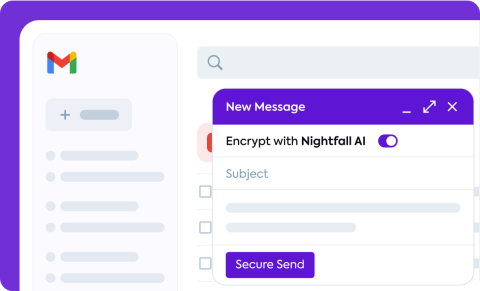
5 Steps to Send An Encrypted Email in Gmail

These days, we use Gmail for everything from customer service to telehealth. Over time, your Gmail account might become a treasure trove of sensitive PII, PCI, PHI, and passwords that hackers can leverage. In fact, as of this year, just under half of all data breaches involve email. So, what can you do to protect your inbox? Enter: email encryption.

Arctic Wolf Observes Akira Ransomware Campaign Targeting SonicWall SSLVPN Accounts

On August 22, 2024, a remote code execution vulnerability (CVE-2024-40766) was disclosed in SonicOS, affecting a selection of SonicWall firewall devices. At the time of disclosure, active exploitation was not known and no proof-of-concept exploit was publicly available. As of September 6, 2024, however, the security advisory has been updated with additional details, indicating that the vulnerability is potentially being actively exploited.

Understanding FSMO Roles in Active Directory

If your organization runs on Microsoft Active Directory, you rely on one or more domain controllers to keep AD operations going. On the surface, Active Directory seems to run on a peer-to-peer models in which every domain controller (DC) has the authority to create, modify, and delete AD objects. That is because every domain controller holds a writable copy of its domain’s partition, the only exception being read-only DCs.

Protecting NATO Secret and Foreign Government Information

We’ve talked a lot on this blog about protecting controlled unclassified information, and we’ve mentioned in places some other kinds of information, like classified and secret information, covered defense information, and other protected information. There’s one thing all of this information has in common: it’s generated by the United States government.