Understanding FSMO Roles in Active Directory

If your organization runs on Microsoft Active Directory, you rely on one or more domain controllers to keep AD operations going. On the surface, Active Directory seems to run on a peer-to-peer models in which every domain controller (DC) has the authority to create, modify, and delete AD objects. That is because every domain controller holds a writable copy of its domain’s partition, the only exception being read-only DCs.
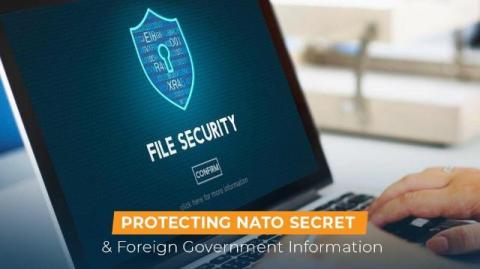

Protecting NATO Secret and Foreign Government Information

We’ve talked a lot on this blog about protecting controlled unclassified information, and we’ve mentioned in places some other kinds of information, like classified and secret information, covered defense information, and other protected information. There’s one thing all of this information has in common: it’s generated by the United States government.

Datadog delivers smarter vulnerability remediation

Security teams today normally perform ongoing vulnerability remediation as a key part of their efforts to secure applications. This process entails applying updates to remove known flaws, typically published as Common Vulnerabilities and Exposures (CVEs), that are discovered in third-party libraries within application code. While “applying updates” might sound like a straightforward task, in practice, eliminating vulnerabilities has become increasingly challenging in the current environment.

Evolution of Scalper Bots Part 3: Expansion into New Markets

Welcome back to the next blog in our Evolution of Scalping series. During our last blog we covered the landmark case that exposed the power of automated purchasing – Wiseguy Tickets. We detailed their operation and their use of bots, which allowed them to snatch up huge volumes of available tickets for high-demand events.

Phishing Attack Takes a Two-Step Approach to Leverage Legitimate Sites and Evade Detection

Analysis of a new phishing attack demonstrates how attackers may take a longer path to reach their malicious goals while staying “under the radar” of security products. It would be pretty simple to create a phishing attack that sends its’ victims a brand-impersonated email with a link that takes you to an impersonated webpage that asks for credentials, personal details or credit card information. But many of today’s security products will detect the impersonation immediately.

Migrate VMs from VMWare ESXi to Proxmox VE

VM migration from VMware to Proxmox can be necessary whether an organization is diversifying its infrastructure or completely moving its production workloads to a new platform. There are two main methods to migrate virtual machines from VMware ESXi hosts to Proxmox VE hosts: manually and with special tools. This blog post provides a detailed step-by-step tutorial for the successful migration of virtual machines to Proxmox VE using the 2 methods.

Understanding Risk Management in Trading for Newcomers

Risk management is a crucial pillar of successful trading, especially for newcomers navigating the often volatile financial markets. At its core, risk management involves identifying, assessing, and prioritizing risks to minimize potential losses. New traders should start by determining their risk tolerance - an understanding of how much they can afford to lose without jeopardizing their financial stability. Keeping a crypto trading diary can also help in tracking decisions and outcomes, which is essential for improving one's approach to risk management.

Passwork: The ultimate self-hosted solution for password management

In the current cybersecurity landscape, protecting sensitive information is more crucial than ever. Password managers have become an essential tool for businesses to manage credentials securely and efficiently. With numerous options on the market, finding the right password manager can be overwhelming, especially for companies seeking full control over their data. Enter Passwork-a self hosting password manager designed specifically for businesses.