The Future of Superintelligent Security Operations Starts with Data Built for AI

Every major shift in security operations starts with a shift in the underlying platform. The AI era is no different. As artificial intelligence moves from novelty to necessity, the real dividing line in cybersecurity will not be which vendor can add AI features the fastest. It will be which platforms are built on the right foundation to make AI useful in real operations and trustworthy when the stakes are high. That foundation is data, but not in the simplistic sense the market often uses the term.

The AI Malware Surge: Behavior, Attribution, and Defensive Readiness

Over the last year, AI-assisted malware development has evolved from an experimental practice into a common part of the attacker toolkit. In a rolling window from February 2025 to February 2026, Arctic Wolf Labs observed over 22,000 distinct files triggering AI-focused YARA rules across multiple malware repositories. These files included AI-generated code, large language model (LLM)-style scaffolding, runtime AI API integration, and DeepSeek-derived artifacts.

How To Protect Patient Data From Phishing Attacks

According to HIPAA Journal, phishing remains one of the most common and effective attack methods used against healthcare organizations and is a leading cause of healthcare data breaches. As healthcare becomes more digital, cybercriminals increasingly target clinicians and administrative staff to access Electronic Health Records (EHRs) and other Protected Health Information (PHI).

Introducing IP Range Scanning: continuous Surface Monitoring for your entire network

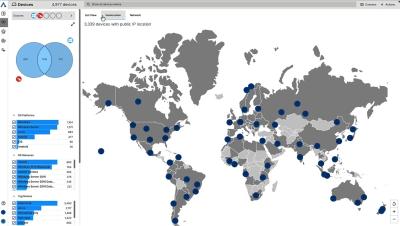
Most organizations share a common, uncomfortable secret: they can’t answer basic questions about what is actually exposed on their IP ranges. As companies grow, whether through decades of history, global data centers, or regional allocations, they lose visibility of their IP footprint. Traditional manual reconnaissance is a point-in-time sync, often leaving security teams blind to what’s actually running on their infrastructure.

Spring 2026 GenAI Code Security Update: Despite Claims, AI Models Are Still Failing Security

The last six months have been nothing short of revolutionary for AI-powered coding. OpenAI‘s “Code Red” release brought us GPT-5.1 and 5.2. Google unveiled Gemini 3 with its touted “unprecedented reasoning capabilities.” Anthropic rolled out Claude 4.5 and 4.6, powering the increasingly ubiquitous Claude Code features. Enterprise adoption of tools like OpenClaw has exploded, with developers praising unprecedented productivity gains.

Identity and Access Management (IAM) Use Cases

Before the COVID-19 pandemic, when hybrid and remote work became common, Identity and Access Management (IAM) worked in the background. It was important, but mostly invisible outside IT and security teams. That’s not the case anymore. Today, identity shows up in almost every digital interaction. Employees move between devices. Customers expect sign-ins to just work. Compliance teams want clear answers about access trails. Industry trends reflect this shift.

The Next Step in Cyber Risk Management: Decision Simulation

‍At its root, cyber risk management is essentially a forward-looking discipline. The goal has never been solely to understand current exposure, but to determine which actions will reduce it most effectively, given the organization's priorities and constraints. Organizations today can assess control maturity and quantify financial exposure with increasing precision, giving security and GRC leaders a more comprehensive picture of their risk landscape than ever before.

Session on Most Dangerous Cybersecurity Attacks on Enterprises and How to Prevent Them, ETCISO 2026

In this talk at ETCISO SecuFest 2026, our Founder & CEO Mr. Anirban Mukherji discusses dangerous cyberattacks on enterprises and prevention strategies. AI has accelerated our development of IAM, MDM, and DLP solutions from months to weeks, unlocking cybersecurity opportunities. Key topics include the four AI security pillars (security from/for/of/using AI), the Replit database incident, AI agent vulnerabilities, defenses such as sandboxing and SSO/MFA, data privacy requirements beyond consent, and AI's influence on digital marketing and talent strategies.

Beyond Firewalls: Why User Behavior Data Is Becoming Essential to Modern Security

For decades, cybersecurity has been defined by barriers. Firewalls, antivirus software, encryption protocols, each designed to keep threats out and systems protected. These tools remain essential, but the nature of digital risk has changed. Today, many security incidents don't begin with external breaches alone. They emerge from within normal activity, subtle shifts in user behavior, unusual access patterns, or unexpected interactions that go unnoticed until it's too late.

How Connected Vehicles and AI Are Redefining Insurance and Digital Security Risks

The way we drive is changing. Cars are no longer just machines that take us from one place to another. They are now connected systems that collect data, communicate with networks, and use artificial intelligence to improve safety and performance. These connected vehicles are transforming industries like insurance and cybersecurity in ways we are only beginning to understand.