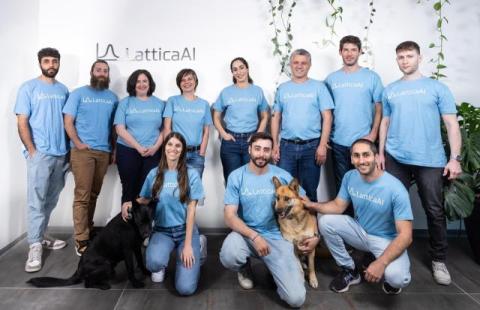
Lattica Emerges from Stealth to Solve AI's Biggest Privacy Challenge with FHE

Lattica emerges from stealth with $3.25 million in pre-seed funding. The round was led by Konstantin Lomashuk's Cyber Fund, with participation from angel investor Sandeep Nailwal, co-founder of Polygon Network and Sentient: The Open AGI Foundation, among others.

CVE Program Funding Disruption: What It Means for Cybersecurity and Veracode Customers

On April 16, 2025, the cybersecurity community faced a potential crisis as U.S. government funding for the Common Vulnerabilities and Exposures (CVE) program, managed by MITRE and sponsored by the Cybersecurity and Infrastructure Security Agency (CISA), was set to expire.

How to Run a Domain Spoofing Check (and Stop Fake Sites Before They Hurt You)

Imagine this: a customer clicks a paid search ad that looks exactly like your brand—same logo, same layout, even your brand tone. They enter their login credentials, maybe their payment details… and they’ve just handed everything over to a scammer. This is domain spoofing in 2025. And it’s scaling faster than most businesses are prepared for.

Who Must Comply with DORA? Complete Guide for Businesses

The Digital Operational Resilience Act (DORA) is a critical regulatory framework introduced by the European Union to enhance the digital resilience of the financial sector. It mandates a uniform set of standards for ICT risk management frameworks, digital resilience capabilities, and third-party service oversight. Enforceable by European supervisory authorities, DORA ensures that all covered entities can respond to and recover from major ICT-related incidents, including cyber attacks.

The Bybit Wake-Up Call: Strengthening Crypto Security Before It's Too Late

The recent Bybit hack, in which bad actors swooped in and made off with $1.5 billion worth of Ethereum, has sent shockwaves through the cryptocurrency industry. As one of the largest digital heists in history, it lays bare the vulnerabilities in crypto exchange security and the persistent threats from sophisticated actors. And yes, Bybit has assured its customers that their funds will be covered; the question is how these incidents happen in the first place.

Recap: KubeCon + CloudNativeCon Europe 2025

When I got the assignment to attend KubeCon 1st of April I thought it was an April prank, but as the date got closer I realized—this is for real and I’ll be on the ground in London at the tenth anniversary of cloud native computing. I’ve seen a lot of tech events during my years in the industry while trying not to get replaced by AI and I have to say this one stands out! Image source: CNCF YouTube Channel Here is my recap of KubeCon + CloudNativeCon Europe 2025.

Enhancing Cybersecurity for Law Firms: Best Practices for Compliance and Personal Data Protection

Law firms manage a vast amount of sensitive information, from merger deals and criminal evidence to intellectual property and personal data, making them prime targets for hackers and malicious insiders. Security breaches can lead to reputational losses, remediation costs, and penalties. That’s why strict IT requirements regulate cybersecurity for law firms.

AI Usage at Work Is Exploding - But 71% of Tools Put Your Data at Risk

As AI becomes deeply integrated into critical business operations and adopted by increasing numbers of departments and employees, the volume and sensitivity of data flowing into these systems has grown exponentially. Companies now face a dual challenge: harnessing AI's potential while managing the substantial data risks it introduces.

Change Your Password Day: Why It's Time to Rethink Password Security

As Change Your Password Day rolls around on 1st February, it’s a great opportunity to highlight the importance of secure password practices. While traditional advice has often encouraged frequent password changes, this approach has been reconsidered by cybersecurity experts, including the National Institute of Standards and Technology (NIST). Modern best practices now recommend focusing on creating strong, memorable passwords and using multi-factor authentication (MFA) to enhance security.