The 2025 Remediation Operations Report: Why Organizations Still Struggle in 2025

The second annual Remediation Operations Report from Seemplicity paints a clear picture: while organizations are investing more in security, they’re not necessarily getting faster or more effective at fixing what matters. This year’s data highlights a growing gap between strategic intent and day-to-day execution. Security leaders want to move faster, collaborate better, and prioritize smarter. But process bottlenecks and legacy workflows keep getting in the way.
Building a hybrid data fabric for integrated security

Organizations face increasingly complex security challenges driven by the convergence of on-premises environments, cloud deployments, and edge computing nodes. The implementation of a hybrid data fabric has emerged as a powerful approach for managing and integrating data across distributed architectures while ensuring robust, integrated security. This article provides a deep dive into the technical and strategic aspects of constructing such a fabric.

OWASP Announces BLADE Business Logic Attack Framework to Give Enterprises Better Tools to Fight Sophisticated Bots

Update to attack framework announced to coincide with recognition as an industry standard The Open Worldwide Application Security Project (OWASP) announced today that the Business Logic Attack Definition Framework (BLADE Framework) has become The OWASP BLADE Framework Project. The name change reflects the acceptance of the attack framework as an OWASP project and recognition of the framework as an industry standard.

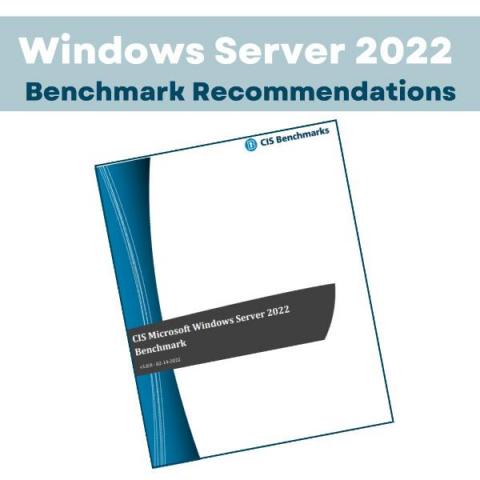
Using CIS Hardening Scripts for Windows Server: Benefits and Risks

With each new version of Windows Server released, comes new security risks. Whilst each update enhances functionality for users, it can sometimes come at the cost of new vulnerabilities. The Centre for Internet Security (CIS) Benchmarks serve as a security baseline, helping both individuals and companies implement best practices for a secure configuration.

Modernizing Cyber Risk Registers: From Spreadsheets to SaaS Solutions

‍In the early days of cyber risk management, during which the responsibilities of a security and risk manager (SRM) were relatively siloed and limited in scope, leveraging a spreadsheet to maintain a cybersecurity risk register was a practical and widely accepted solution. At that time, the volume and complexity of cyber risks were much more manageable than they are today, making spreadsheets a convenient way to catalog them, prioritize mitigation activities, and track progress.

Emerging Threat: SAP NetWeaver Visual Composer CVE-2025-31324

On April 24th, 2025, SAP disclosed CVE-2025-31324, a critical missing authorization check vulnerability (CVSS 10.0) affecting the Metadata Uploader component of SAP NetWeaver Visual Composer. This vulnerability fails to restrict file upload content, allowing unauthenticated remote attackers to achieve full remote code execution (RCE) on affected servers.

Mastering AI Adoption with End-to-end Security, Everywhere

The pace of innovation in generative AI has been nothing short of explosive. What began with users experimenting with public apps like ChatGPT has rapidly evolved into widespread enterprise adoption. AI features are now seamlessly embedded into everyday business tools, such as customer service platforms like Gladly, HR software like Lattice, and even social media networks like LinkedIn.

Security Bulletin: CVE Program Funding Concerns and Emerging Alternatives

On April 16, 2025, a critical moment unfolded in the cybersecurity world when the U.S. Department of Homeland Security’s funding for the Common Vulnerabilities and Exposures (CVE) Program, operated by MITRE, was set to expire. The CVE system is a globally relied-upon database for cataloging known cyber vulnerabilities and has been a cornerstone of vulnerability management for over 25 years since its public launch in 1999.

Fireblocks Enables Web3 Connectivity for Calastone's Industry-First Tokenised Fund Distribution Platform

Fireblocks is now working with Calastone, the largest global funds network, to support Web3 connectivity within Calastone’s Tokenised Distribution solution, a first-of-its-kind solution enabling asset managers to tokenise any fund on Calastone’s network and distribute it across blockchains such as Ethereum and Polygon. Fireblocks is providing secure infrastructure components that enable integration with Web3-native distributors.