Helping the Financial Sector Deliver Secure and Modern Infrastructure through Regulation

In 2024, ransomware continues to be the most prevalent form of cyber-attack, affecting three out of four organisations, according to Veeam. The increasing frequency and sophistication of these attacks are driven by easy access to ransomware kits on the dark web and the significant profits cybercriminals generate through extortion schemes.

A 7-step Essential Eight compliance checklist

Implementing Essential Eight (E8) is mandatory for in-scope organisations, such as government agencies, critical infrastructure providers, and other non-corporate Commonwealth entities (NCEs). ‍ Even if your organisation isn’t scoped by the framework, aligning with E8 is recommended because it outlines the baseline requirements for defending against cyber threats.

3 Considerations for Navigating Australian IRAP Assessments

Aligning with the Australian Government’s expectations for cybersecurity can present challenges, especially for organizations unfamiliar with the frameworks in use. For those looking to work with or support government programs, understanding how systems are assessed against the Information Security Manual (ISM) is critical. The ISM, maintained by the Australian Signals Directorate (ASD), sets out cybersecurity principles to guide the protection of government information and systems.

7 Ways to Jump-Start Your Incident Response

Recent research indicates that only 25% of organizations have incident response plans. Without such plans, companies are extremely susceptible to potential cyberattacks, and the stark business reality is that they take much longer to recover. Unfortunately, there are daily examples of major data breaches where a particular company’s incident response could have been managed more effectively.

Protecting Entra ID with Veeam

If you’re not familiar with Entra, you might still think of it as “the artist formerly known as Azure Active Directory.” While its roots lie in being a cloud-based Active Directory (AD), Entra has evolved far beyond that. The name change reflects its expanded capabilities, making it much more than just AD. Many of our customers leverage Microsoft 365 or other Azure services that rely on the Entra platform.

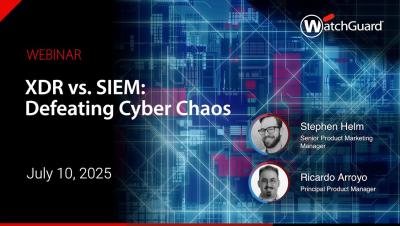
XDR vs. SIEM: Defeating Cyber Chaos

Cybersecurity decision-makers face a growing challenge: defending against a rising tide of threats without drowning in operational complexity. Designed for large security teams, SIEM platforms often introduce more chaos than clarity, burdening small teams with high costs, complex deployments, and overwhelming data. In this webinar, Stephen Helm and Ricardo Arroyo will discuss the core differences between SIEM and XDR (Extended Detection and Response) and explain why XDR is emerging as the smart, scalable choice for modern MSPs and lean IT security teams.

CVE-2025-25257: Critical Unauthenticated SQL Injection Vulnerability in FortiWeb

On July 8, 2025, Fortinet released fixes for a critical vulnerability in FortiWeb that could allow an unauthenticated threat actor to execute SQL commands via crafted HTTP or HTTPS requests, tracked as CVE-2025-25257. The flaw lies in the Graphical User Interface (GUI) component and stems from improper neutralization of special elements used in SQL statements. The vulnerability was discovered by a security researcher and responsibly disclosed to Fortinet.

Cato's Unique ZTNA Broker Architecture - A Difference That Matters!

Zero Trust Network Access (ZTNA) has rapidly become a foundational security strategy for organizations modernizing their IT infrastructure. The increasing distribution of users, devices, and applications makes traditional security measures inadequate. Several solutions offer cloud-based brokers to implement ZTNA, but it’s crucial to understand that these solutions are not created equal. Let’s explore why Cato Networks’ cloud-based ZTNA solution distinctly stands apart.