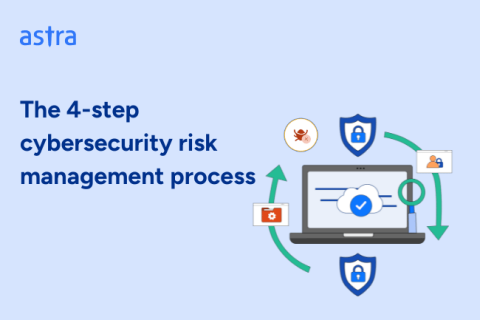
The 4-Step Cybersecurity Risk Management Process

You are the CISO of a mid-sized enterprise that is experiencing rapid growth, i.e., your security stack is becoming increasingly complex by the month, compliance auditors are asking more challenging questions, and your board wants measurable proof that security investments are actually reducing risk. Meanwhile, attack vectors are evolving daily, and your current risk assessments consistently lag behind.

AppSec Tools: From Reactive to Proactive, Devs Take Action! #developer #appsec

Mend.io, formerly known as Whitesource, has over a decade of experience helping global organizations build world-class AppSec programs that reduce risk and accelerate development -– using tools built into the technologies that software and security teams already love. Our automated technology protects organizations from supply chain and malicious package attacks, vulnerabilities in open source and custom code, and open-source license risks.

Understanding NIST AI RMF 1.0 and How AppTrana WAAP Strengthens AI Risk Management

AI systems depend heavily on secure web applications, APIs, and third-party data sources, but these interfaces are often the most exposed and exploited. The NIST AI Risk Management Framework (AI RMF 1.0) helps organizations govern, map, measure, and manage AI-related risks comprehensively.

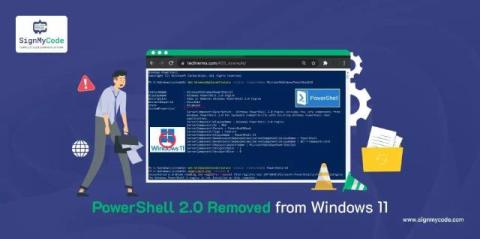
Microsoft Retires PowerShell 2.0 in Windows 11

The move to remove PowerShell 2.0 from Windows 11 is strategic and long overdue. Microsoft is making this move to embrace modern, secure, and efficient system tools. PowerShell 2.0 has many inherent security issues tied to the deprecated framework and its reliance on deprecated encryption & validation protocols.

Choosing a DDoS Mitigation Strategy: How NDR Helps Identify and Contain DDoS Attempts

In today’s digital battlefield, distributed denial-of-service (DDoS) attacks remain one of the most disruptive tactics used by threat actors. These attacks are not just about overwhelming servers they’re about business downtime, customer dissatisfaction, and reputation loss. With the increasing complexity of attack vectors, traditional DDoS mitigation strategies are no longer enough. Enterprises must adopt smarter, faster, and more adaptive ways to detect and mitigate DDoS attacks.

DORA Non-Compliance Could Cost Your Business

Prompted by a new era of cyber-attacks surging downtime and data breaches, the Digital Operational Resilience Act (DORA) regulation came into force on 17th of January to reshape how organisations approach security, privacy and cybersecurity. Cybercriminals are becoming increasingly daring and creative, with an expected rise in the exploitation of new vulnerabilities in 2025.

An Enterprise Security Strategy That Turns SecOps Into Heroes

The tension between security teams and developers is palpable. Developers are considered impatient risk-takers, while SecOps folks are barely tolerated as a hindrance to adopting new tools and workflows. Weekly sprints, tight deadlines, and looming security threats (especially in the GenAI and vibe coding era) exacerbate this tension.