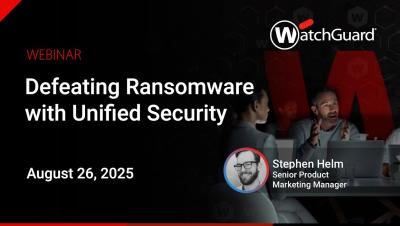
Defeating Ransomware with Unified Security

Ransomware is getting smarter, so your security better be, too. The old playbook of scattered tools and siloed defenses no longer cuts it. Every business needs to connect the dots to stay ahead. In this webinar, we’ll show you how bringing together SASE, XDR, NDR, and automation under a unified platform creates a powerful security force that works with your team, not against it.

Breach Ready. Board Ready. Built for Efficiency.

In today’s modern SOC, more data doesn’t always mean better outcomes. Security teams are overwhelmed by irrelevant telemetry, storage bills are out of control, and compliance regulations demand long-term retention—even for data with little threat value. Legacy SIEMs treat all logs the same, flooding analysts with noise and slowing down response times. The result? Bloated infrastructure, delayed investigations, and boardroom frustration over unproven ROI.

Why Healthcare Needs DevOps Backup And DR Strategy

There is a critical speed-control paradox in the healthcare DevOps landscape: while DevOps best practices dramatically cut software delivery cycles, a lack of confidence in Disaster Recovery readiness, noted by Gartner, opens up room for fragile operations despite increased deployment speed. This gap demands a solution that adds reliability, such as comprehensive backup strategies, to ensure that faster development doesn’t compromise mission-critical systems ignited through DevOps platforms.

Are We Creating an AI Security Nightmare?

Out tomorrow! 77% of enterprises have already faced AI-related security incidents. Are we building innovation—or just our next crisis? AI is becoming more prevalent, especially in the world of cybersecurity. However, there are many AI risks and dangers of AI that people should be aware of, including the weaponisation of ai. It's important to consider the ethical implications of artificial intelligence, especially in fields like ai in healthcare.

Keeping Britain connected: The crucial role of cybersecurity automation in national infrastructure

As the UK’s vital services face escalating digital threats, the role of intelligent automation in cybersecurity has become paramount. Chris Jacob, VP, Global Field Operations at ThreatQuotient, outlines why proactive, automated defences are crucial for safeguarding the critical national infrastructure that powers the nation.

Securing cloud console and CLI access for agile software development

Fast-moving cloud environments demand speed, but without the right access controls they invite risk. Resources such as virtual machines, containers, and services are created, modified, and terminated at a rapid pace. At the same time, workloads are becoming increasingly distributed, with data and applications spanning multiple regions, accounts, and even across different cloud service providers (CSPs).

OT Endpoint Risks and How to Eliminate Them

Cyberattacks on operational technology systems increased 87% in 2024 (Dragos 2024), with endpoint access emerging as THE top attack vector for OT and industrial control systems (ICS). This means the same connections vital to maintaining your critical systems, whether a vendor connecting remotely via VPN or an employee logging into a local workstation, represent a potential entry point into your environment.

Where Online Analytical Processing (OLAP) Overlaps With Security Operations

Imagine security data and analytics like a carnival’s hall of mirrors. From convex mirrors that show you a shorter, squatter version of something to the concave mirrors that show a highly magnified image, you see the same object in multiple ways. Every view gives you a different insight and provides a unique vantage point. Online Analytical Processing (OLAP) systems are different mirrors that allow security teams to create focused analytics models for different insights about your security posture.