Securonix - Breach Ready. Board Ready. AI-Powered.

Security teams today are expected to do it all. Stop threats faster. Prove value to the board. Scale with fewer resources. Securonix makes it possible. Breach Ready means unified detection and response with up to 60 percent faster time to containment and 50 percent less analyst workload. Board Ready means 193 percent ROI, a six-month payback period, and reporting that drives strategic decisions. AI Powered means modular agents that cut false positives by 90 percent and automate triage with precision, keeping your team in control. This is modern security. This is Securonix.
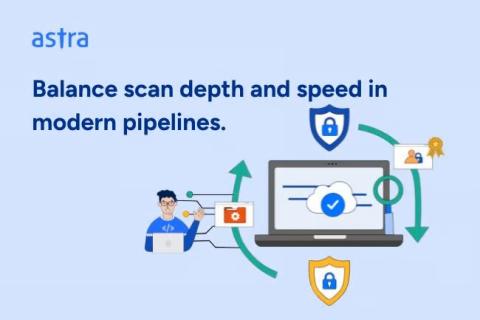
Balancing Scan Depth and Speed in Modern Pipelines

Most teams run on velocity budgets, not risk budgets. While features get sprints, milestones, and release slots, risk, on the other hand, gets hope. When scan depth and speed decisions are made without an explicit budget for risk, the outcome is predictable: throughput is optimized while exposure compounds silently in the background.

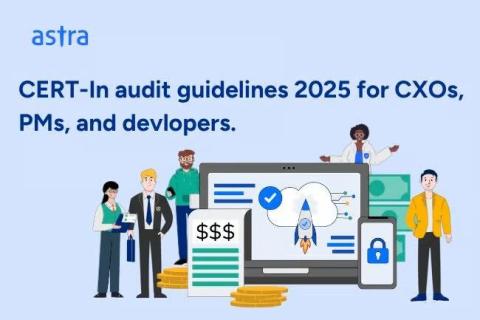
CERT-In 2025 Audit Guidelines: What Every CXO Needs to Know

When engineers stress-test a bridge, they don’t ask the pedestrians to sign off on safety. They put the liability squarely on the designers, contractors, and city officials, i.e., if it fails, it’s their names on the line. CERT-In 2025 audit guidelines and framework apply the same logic to digital infrastructure. No more passing the buck to auditors; CXOs must sign risks, PMs must certify vendors, and developers must prove security in every build.

No More Blind Spots: Detecting WAF / CDN Control Bypass in IONIX Exposure Management

In today’s digital landscape, web application security is more critical than ever. Most organizations rely on Cloud-Based Security Providers offering integrated Web Application Firewalls (WAFs) and Content Delivery Networks (CDNs), for shielding their assets from direct exposure and attacks such as SQL injection, XSS, and DDoS.

Next.js Vulnerability: The Critical Flaw of CVE-2025-29927 Explained

A critical vulnerability, identified as CVE-2025-29927, has shaken the Next.js development community. Rated with a severity score of 9.1 (Critical), this flaw allows attackers to completely bypass authorization checks in middleware, potentially granting unauthorized access to sensitive data and protected routes. The issue is a powerful reminder that even a small design flaw in a popular framework can have widespread and dangerous consequences.

What is Code Injection? Types, Prevention & Detection Strategies

In 2021, a critical vulnerability in a popular Node.js library allowed hackers to carry out code injection and silently compromise thousands of applications, with disastrous effects. It wasn’t a brute-force attack. It wasn’t ransomware. It was some wittily constructed pieces of malevolent code that got through defences and provided attackers with complete carte blanche. Code injection attacks are no longer rare. They’re alarmingly common.

Is That Gmail Security Alert Real? How to Spot a Phishing Scam

In a world where our lives are increasingly managed through email, an unexpected security alert can be a jarring experience. Recently, misinformation spread about a supposed mass security alert from Google, creating widespread panic. While Google has confirmed these claims are false, the incident serves as a powerful reminder of a constant threat: phishing scams. These fraudulent emails mimic real security warnings to trick you into giving away your personal information.

Trustwave Security Colony's 8 Commandments for AI Adoption

The advent and continuing widespread adoption of artificial intelligence for basic research, document creation, code writing, or any other purpose increases an organization’s threat level if done incorrectly. However, when an organization implements AI as a tool in a thoughtful and well-considered manner, it can be a great benefit.

What security leaders need to know about mergers and acquisitions

For security teams, the stakes are rarely as high as they are during mergers and acquisitions (M&A). Suddenly, you’re tasked with managing two companies' worth of devices, applications, identities, and data. There can be serious issues lurking within the newly acquired (or soon-to-be-acquired) company, including legacy systems, poorly vetted third-party contractors, and incompatible security policies.

Examples of AI Privacy Issues in the Real World

What’s the fastest way to lose trust? Expose private data. With AI moving from pilots to core workflows in support, finance, HR, and healthcare, one careless prompt or leaky integration can turn into headlines, fines, and weeks of incident response. The most useful way to understand the risks is to study AI privacy issues examples from the real world.