Security | Threat Detection | Cyberattacks | DevSecOps | Compliance

CloudCasa DR for HPE - HPE Kubernetes Service (HKS) - PART 1- Failover

This demo shows a CloudCasa DR failover for a file-server application running on HPE Kubernetes Service clusters. - HPE Kubernetes Service clusters (or HKS) is HPE’s managed Kubernetes offering, provisioned through the HPE Morpheus VM Essentials console. A primary HKS cluster runs the file-server app on a volume backed by an HPE Alletra MP B10000 array, replicated to a second Alletra array at a recovery site where a second HKS cluster stands ready.
Proportionate Containment: Stop Threats Without Stopping Operations

What does effective containment look like in practice? In this video, Daniel Trivellato, VP of OT, Healthcare and Cyber Risk Solutions at Forescout, explains how organizations can apply proportionate containment strategies that reduce cyber risk without disrupting operations. Learn why context matters, how containment actions should align with the severity of a threat, and how security teams can respond quickly while keeping critical systems running.

ITDR + IGA: The key to 'self-healing identity security'

Curious what an identity threat detection and response (ITDR) system does and why it matters? Rob Kraczek, global strategist at One Identity, breaks down its ability to catch anomalous activity and explains how ITDR and a strong identity governance and administration (IGA) tool have each other’s back, watching the front and back doors attackers use to get in.

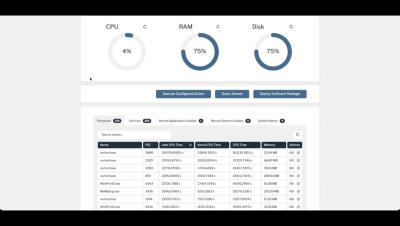
Real-Time CMDB: The Data Your Automations Can Finally Trust

Most CMDBs are lying to you. The data looks clean, the dashboards look confident, and none of it reflects what's actually running in your environment right now. In this quick walkthrough, Steven Payne shows what happens when Tanium's real-time endpoint truth flows directly into ServiceNow's CMDB — no stale scans, no manual reconciliation, no guessing. Watch asset inventory, software, patch health, and vulnerability exposure snap into focus in real time, and see why "good enough" data is no longer good enough for the automations and AI your business is betting on.

What tasks should AI take over?

What part of your profession do you hope AI takes over? What should it never touch? Security practitioners and technology leaders landed in the same place: hand off the tedious work, and keep human judgment on anything that affects blast radius. That's the skills reckoning. As AI absorbs the repetitive work, the expertise that decides what an agent is allowed to reach becomes more valuable.

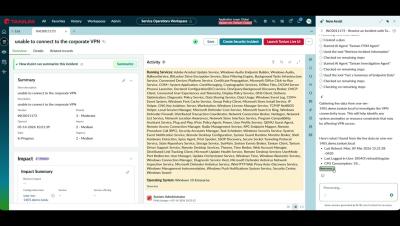
Autonomous Service Desk: A Ticket, Solved Before You Blink

What if your service desk could solve a ticket before a human ever picked it up? Steven Payne walks through a live incident and shows ServiceNow's Now Assist doing the detective work in real time, pulling live Tanium endpoint data to pinpoint the root cause and draft the resolution, all in seconds. No log-diving, no remote sessions, no back-and-forth. Just a faster path from "ticket opened" to "issue resolved," with a person still firmly in control of the final call. This is what an autonomous service desk actually looks like in action — watch it happen.

"Speaking the Same Language" Tanium Atlas MCP Server: Tanium Tech Talks #169

Want to point your own AI at Tanium? The Atlas MCP Server makes that possible — governed, scoped, and available today. In this episode we cover: Tanium MCP - Available now (read-only) How to set up OAuth clients and how RBAC applies How to scope a single-purpose agent to one module, like Asset, using path-based tool filtering How to tell which tools consume Atlas AI credits - and which don't!

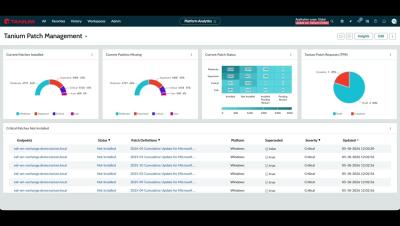
Autonomous Patch Management: Continuous, Closed-Loop Remediation

A critical vulnerability is discovered. Minutes later, it's patched — approved, scheduled, and deployed, with no one bouncing between systems to make it happen. In this video, Steven Payne shows how Tanium and ServiceNow close the gap between finding a problem and fixing it, turning a vulnerability into a governed change request and an executed patch deployment without a single manual hand-off. It's change management and endpoint remediation working as one motion instead of two disconnected jobs. If patch cycles have ever felt like a race against the clock, watch how much faster — and safer — that race can be.