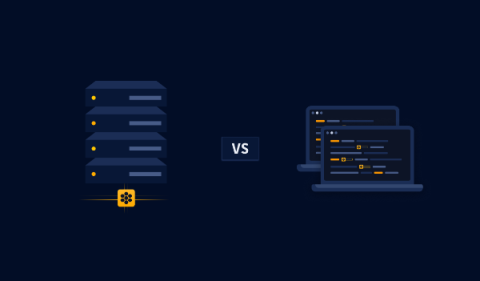
It’s not a mystery that eBPF (Extended Berkeley Packet Filter) is a powerful technology, and given its nature, it can be used for good and bad purposes. In this article, we will explore some of the offensive capabilities that eBPF can provide to an attacker and how to defend against them.
It’s not news that cybersecurity is now a board-level imperative. But with all the talk about that, here’s something we don’t talk about enough: board directors and other senior executives might know they need to have these conversations, but in many cases are still struggling with how to have them in a productive way, especially if they aren’t technical or haven’t spent any real time in a technology role.
No, phishing and social engineering are not the same. Phishing is a subset of social engineering, meaning phishing attacks are a form of social engineering, but not all social engineering is considered phishing. Read on to learn more about what differentiates phishing from social engineering and how to protect yourself from both.
In today's rapidly evolving technological landscape, SaaS applications have been essential in driving efficiency and promoting collaboration. But the benefits of the cloud also bring new risks, and securing your organization against a vast array of cloud security threats can be a unique challenge.
Organizations are continually searching for ways to strengthen their defenses against an ever-expanding array of cyber threats. One powerful strategy that has gained momentum in recent years is the collaboration between threat intelligence and cybersecurity automation.
JavaScript runtimes help you build advanced, server-driven JavaScript projects that aren't dependent on the user's browser to run. There are several choices of runtimes available, with the supremacy of the old stalwart Node.js being challenged by Deno and Bun. Deno is the latest project produced by the same developer who originally created Node.js, Ryan Dahl, back in 2009.