Security | Threat Detection | Cyberattacks | DevSecOps | Compliance

Application Onboarding in IGA: A Practical Guide

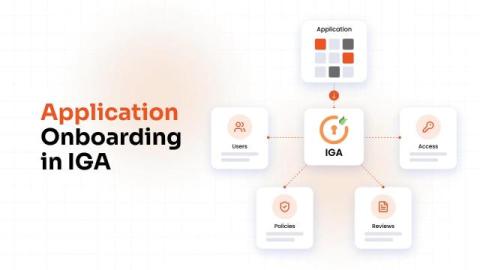
Application onboarding is the process of integrating an application with your identity governance and administration platform so its accounts, roles, and entitlements can be governed. Once an application is onboarded, you can: Without onboarding, an application stays outside your controls, and any access inside it is invisible to your security and audit teams.
Active Directory Governance: How to Know Who Has Access and Why

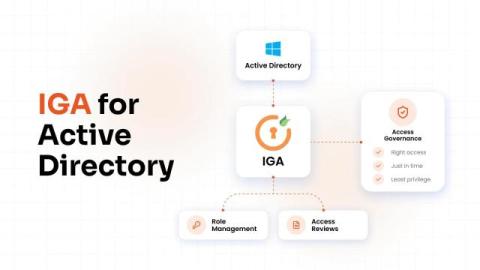
An employee changes roles. Their manager requests access for the new job, and IT grants it quickly. That part works well. The issue appears when access from the previous role stays in place. The same thing happens when a contractor finishes a project, an admin completes urgent work, or a team retires an application. Access often remains because nobody has checked whether it still serves a purpose. Active Directory governance allows IT and security teams to answer three questions.

The hidden cost of over-permissioned service accounts

Service accounts, app integrations, and AI agents often have more access than any person, and they get reviewed last. That gives them one of the largest blast radiuses in the environment, meaning they can reach more if they're compromised. The Uber and Cloudflare breaches and the Salesloft Drift campaign against Salesforce customers show how attackers exploit these accounts. Check them for open, stale, orphaned, and privileged access, then cut access back to what they really use.

Mend.io upgrades 184 open source organizations to the Renovate Community (OSS) plan

Mend.io has proactively upgraded 184 open source organizations and GitHub users to the Mend Renovate Community (OSS) plan, with no request required. The upgrade covers about 3,000 repositories with roughly 4 million combined GitHub stars. Maintainers get higher resource limits, more concurrency, and access to Merge Confidence.

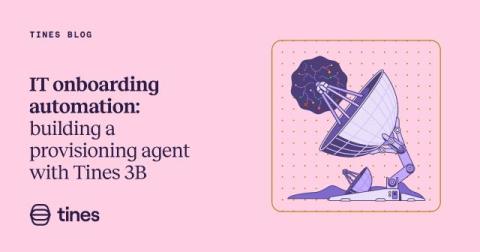
IT onboarding automation: building a provisioning agent with Tines 3B

New hires shouldn't spend their first week waiting on IT. But in most organizations, that's exactly what happens: a Slack account that takes three days to provision, a GitHub invite that falls through the cracks, a hiring manager who has no idea whether security has approved VPN access yet. The result is a frustrating first impression for the employee and a pile of repetitive, error-prone manual work for IT.

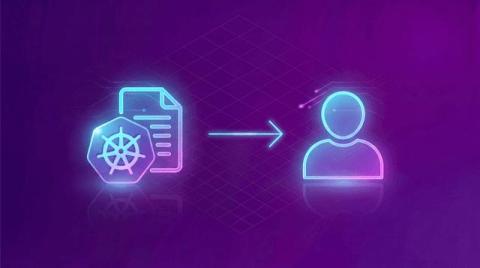
How to Tie Kubernetes Audit Logs to Individual Engineers

Kubernetes audit logs may show multiple engineers as one user and do not capture what is typed after a kubectl exec session starts. Assign each engineer a unique identity, make sure it stays consistent through proxies and cloud IAM, and use a session recorder if you need to review terminal activity.

Risk Acceptance Has a Shelf Life: Notes from the Aviation ISAC Cybersecurity Summit

The first Aviation ISAC summit, a little over a decade ago, was about forty people in a room in Miami, hosted by the Health ISAC. This year’s conference in Vancouver hosted more than five hundred: airlines, airports, OEMs, suppliers, and government, all in one place for three days. Many in the audience were new to the conference. One of the opening speakers asked first-timers to raise their hands, and a lot of hands went up around the room.

Critical Bookly IDOR Leads to Booking Disclosure and Deletion (CVE-2026-93399)

During independent security research conducted as part of the Wordfence Bug Bounty Program, we identified an unauthenticated Insecure Direct Object Reference (IDOR) vulnerability in Bookly, a WordPress appointment booking plugin used to manage online scheduling, services, staff availability and customer appointments.

CrowdStrike and Anthropic Give Critical Infrastructure Defenders the AI Advantage

Critical infrastructure is where cyber risk becomes real-world risk. The environments powering energy, water, manufacturing, and transportation are among the most complex to defend as they often combine decades-old operational technology (OT) with modern IT. Downtime is not an option, and patching isn’t always possible. Now, AI is raising the stakes. Adversaries are using AI to move faster and operate at greater scale, compressing the time defenders have to respond to attacks.