Security | Threat Detection | Cyberattacks | DevSecOps | Compliance

The State of Kubernetes {Open-Source} Security

A first of its kind survey looks at the relationship between open-source and K8s security. Today DevOps and security teams who deploy Kubernetes are forced to make a difficult choice between two security realities. They can either commit to a proprietary solution that they can’t adapt, access its code, influence the roadmap or contribute to its future. Or they can use open-source tools. But then they’ll end up attempting to integrate several of these tools together.

Can You Ride Velero for Your Kubernetes Backups?

Modern containerized applications are increasingly born in the cloud and the big three managed Kubernetes services – Azure Kubernetes Service (AKS), Amazon Elastic Kubernetes Service (EKS), and Google Kubernetes Engine (GKE) – rule the skies. With more users picking managed services in public cloud as their preferred platform, self-managing a backup infrastructure in the cloud is an antithesis.

Windows 10 most critical vulnerabilities in 2022

Microsoft Windows 10 tops the list in terms of users around the world. Among those users, some belong to IT backgrounds but a majority of those users are not acquainted with IT, which means that they have limited knowledge about cybersecurity and its importance. Companies like Microsoft are prone to multiple attacks by bounty hunters or even black hat hackers intending to disturb the company’s operations.

SAST - All About Static Application Security Testing

Static Application Security Testing (SAST) has been a central part of application security efforts for more than 15 years. Forrester’s State Of Application Security Report, 2022 found that lacking application security remains a leading cause of external security breaches, so it’s safe to say that SAST will be in use for the foreseeable future. Contents hide 1 What Is SAST? 2 Why do we need SAST? 3 What problems does SAST address? 4 How does SAST work?

SAST - All About Static Application Security Testing

Static Application Security Testing (SAST) has been a central part of application security efforts for more than 15 years. Forrester’s State Of Application Security Report, 2022 found that lacking application security remains a leading cause of external security breaches, so it’s safe to say that SAST will be in use for the foreseeable future.

How to Deploy the Kubernetes Dashboard

Kubernetes clusters consist of multiple resources and API objects interacting dynamically—which typically makes cluster management via the CLI overwhelming. Kubernetes Dashboard was built to simplify cluster operations by providing a unified, human-friendly interface. The web-based dashboard enables cluster operators to deploy applications, access running workloads, and correlate logs with cluster events. This article demonstrates how to install and use Kubernetes Dashboard.

PyPi Malware Stealing Discord and Roblox Payment Info

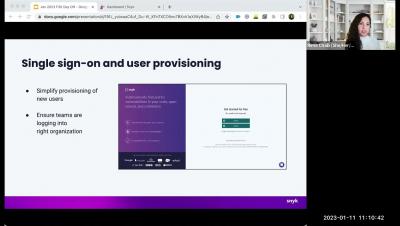
In this livestream we dive into the latest set of malicious packages discovered by the Snyk security research team. We are joined by senior security researcher at Snyk Raul Onitza-Klugman as we also discuss how these findings came to be, what they mean for open source security, and some hypotheses about the future of supply chain security. Didn't catch the live stream? Ask all of your Snyk questions and we’ll do our very best to answer them in the comment section.

Stranger Danger: Your JavaScript Attack Surface Just Got Bigger

Building JavaScript applications today means that we take a step further from writing code. We use open-source dependencies, create a Dockerfile to deploy containers to the cloud, and orchestrate this infrastructure with Kubernetes. Welcome - you're a cloud native application developer! As developers, our responsibility has broadened, and more software means more software security concerns for us to address.
Featured Post

Bridging the DevSecOps Application Connectivity Disconnect via IaC

Anat Kleinmann, AlgoSec's Sr. Product Manager and IaC expert, discusses how incorporating Infrastructure-as-Code into DevSecOps can allow teams to take a preventive approach to secure application connectivity.