Security | Threat Detection | Cyberattacks | DevSecOps | Compliance

What are CIS Benchmarks and how to use them?

A list of 18 procedures (reduced from 20), or “controls,” recommended by the Center for Internet Security (CIS), must be followed to build an IT infrastructure resistant to cyberattacks. The CIS 4th Control advises to establish and maintain a secure configuration process for enterprise assets (end-user devices, including portable and mobile; non-computing/IoT devices; and servers) and software (operating systems and applications) (4.1).

In Modern AppSec, DevSecOps Demands Cultural Change

This is the final of a six-part blog series that highlights findings from a new Mend white paper, Five Principles of Modern Application Security Programs. When thinking of adjectives to describe cyberattackers, it’s doubtful that many people would choose to call them innovative – a term we’re more likely to ascribe to things we enjoy. But the reality is that adversaries are innovative, constantly finding new ways to launch attacks that result in greater rewards for less effort.

Customer Office Hours: CI/CD Best Practices

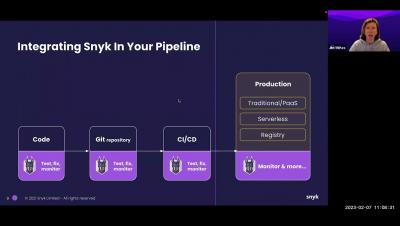
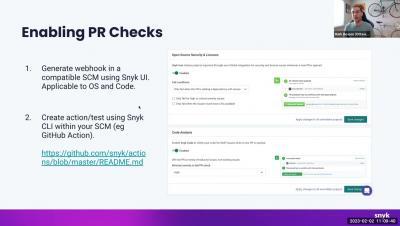
Learn tips and tricks on how to implement, troubleshoot and scale deployments. For example, should you scan in the CICD or in SCM? What implementation methods should you use - plugin, npm, binary…? We will cover this and more. Host: Sebastian Roth, Senior Solutions Engineer Seb brings his expertise as a Principal Software Engineer & Team Lead for over 17 years into the DevSecOps community, where he now focuses on process improvements and shares best-practices to improve security posture.

Renovate Reaches 10K!

First started as an open-source project in 2018, Mend Renovate automates open source dependency updates in software projects. Renovate has enabled a diverse user base across github.com and gitlab.com, reducing risk by mitigating security vulnerabilities and saving developers’ time. Renovate is now endorsed by OpenSSF and Google as the industry standard tool for dependency updates.

Risks Faced by Cloud-Native Apps and How to Assess Them

Modern organizations are adopting a cloud-native approach to their application development. While this approach provides many benefits, it also makes organizations face several challenges, including the challenge of securing the application with a completely different approach. In this blog, we will discuss how software changes and how organizations should think about securing it.

How to Sign Kubernetes using Sigstore

In this livestream we are joined by Adolfo Veytia, Staff Software Engineer at ChainGuard and Tech Lead on the Kubernetes SIG-Release team, as we talk about they were able to tackle signing all of the Kubernetes v1.24 image artifact using Sigstore. We then demonstrate signing an image and vulnerability scan result attestations with Sigstore's cosign utility. Didn't catch the live stream? Ask all of your Snyk questions and we’ll do our very best to answer them in the comment section.