Security | Threat Detection | Cyberattacks | DevSecOps | Compliance

Getting Started With Teleport Desktop Access

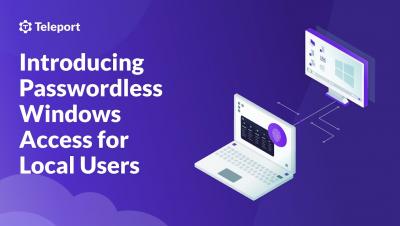
In this video, we'll configure Teleport and Active Directory to provide secure, passwordless access to Windows desktops. In addition, you get Teleport's RBAC system to control access to these Windows desktops, support for copying and pasting to and from remote hosts, as well as Teleport auditing capabilities to capture logs and recordings of all desktop connections.

Audit: Force audit policy subcategory settings

Audit: Force Audit Policy Subcategory is a security policy that allows users to leverage the most accurate and advanced policy settings in Windows Vista. The current version of the Active Directory does not have a feature for managing the audit policy settings, which is why the user has to manually apply Audit: Force Audit Policy Subcategory Settings and configure it to ensure everything works well.

Devices: Prevent Users From Installing Printer Drivers

Devices: Prevent Users From Installing Printer Drivers, as the name suggests, is a security setting that prohibits unauthorized printer usage on specific devices. Once the setting is configured, the types and number of printers used on specific devices will be confined to the approved ones. The main purpose of limiting printer drivers’ installation and usage on workstations is to prevent people from printing unnecessary stuff, which would increase the cost of business operations.

MITRE ATT&CK and Windows registry key

MITRE ATT&CK (Adversarial Tactics, Techniques, and Common Knowledge) is a comprehensive knowledge base of tactics, techniques and procedures that adversaries use to conduct cyber-attacks. The MITRE ATT&CK framework is a globally-accessible knowledge base of adversary tactics and techniques based on real-world observations.

Why Open Source License Management Matters

The ongoing rise in open source vulnerabilities and software supply chain attacks poses a growing threat to businesses, which heavily rely on applications for success. Between 70 and 90 percent of organizations’ code base is open source, while vulnerabilities such as Log4j have significantly exposed organizations to cyberattacks.